
Aesthetic Treatments
Scars & Pores
흉터/모공Enlarged pores and scars do not have a single cause. Treatment may rebuild the skin through controlled resurfacing, improve the support around each pore, or release scar tissue and stimulate new collagen. The approach is chosen according to what has actually changed in your skin.

Pores and scars need different kinds of repair
A pore cannot simply be “closed”, and a scar cannot simply be polished away.
Enlarged pores become more visible for several reasons: increased sebum production, changes around the follicle, loss of collagen and reduced skin elasticity.
Scars are different. They may include loss of dermal tissue, an uneven surface or fibrous attachments that pull the skin downward.
For this reason, treatment at SNU Plastic Surgery Clinic begins by deciding what needs to change:
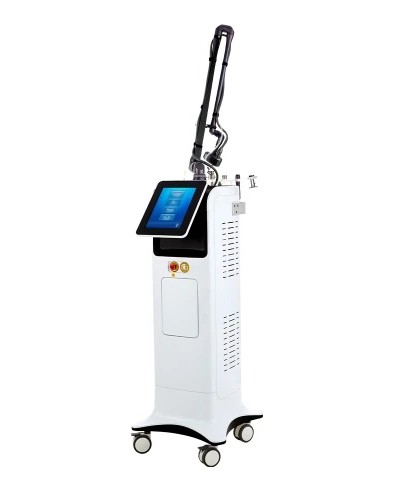
Rebuild the skin. Fractional laser resurfacing and Potenza create controlled microscopic injury, stimulating repair and new collagen.
Improve support and elasticity. Skin Botox can temporarily reduce pore visibility and sebum, while treatments such as Thermage FLX and Sofwave may provide longer-term support when reduced skin elasticity is contributing to visible pores.
Release and regenerate scar tissue. For selected depressed or textural scars, CureJet can combine a micro-subcision-like mechanical effect with delivery of a collagen-stimulating material such as Juvelook Skin.
Two approaches to enlarged pores
- 01
Remodel the tissue around the pore
Fractional resurfacing lasers and Potenza fractional microneedle RF create controlled microscopic zones of injury. As these areas heal, collagen is remodeled and the structure surrounding the pore becomes firmer and smoother. This is often the more direct approach when enlarged pores are accompanied by rough texture or acne scarring.
- 02
Improve skin elasticity and support
Sometimes the pore itself is not the only problem. As the dermis loses elasticity, the opening of the pore becomes more visible. Skin Botox can provide a relatively short-term improvement by reducing sebum activity and changing superficial skin tension. For longer-term support, treatments such as Thermage FLX or Sofwave may be considered when generalized loss of skin firmness is contributing to the appearance of pores. These treatments do not destroy the pore. They improve the skin around it.
Potenza: controlled remodeling from within
Potenza combines microneedling with radiofrequency energy.
Fine needles enter the skin at a selected depth and deliver RF energy directly into the dermis, creating controlled zones of coagulation and stimulating collagen remodeling.
This makes Potenza particularly useful when pores are accompanied by acne scars, irregular texture or reduced firmness.
The treatment depth and energy are adjusted according to the thickness of the skin and the type of scar rather than applying the same setting to the entire face.

Fractional resurfacing: rebuilding the surface
Fractional laser resurfacing creates microscopic treatment columns while leaving surrounding skin available to support healing.
It can be useful when the main problem is surface irregularity: enlarged pores, rough texture and selected acne scars.
More intensive resurfacing can produce a stronger remodeling response, but it also requires more recovery and carries a greater risk of post-inflammatory pigmentation, particularly in Asian skin.
Treatment intensity should therefore match the problem rather than simply being made as strong as possible.
CureJet: release the scar, then stimulate repair
Some scars need more than resurfacing.
Depressed scars and selected fine linear or surgical scars can contain small fibrous attachments that distort the surface. When surgical scar revision is not necessary, releasing these attachments and encouraging the dermis to rebuild can be considered.
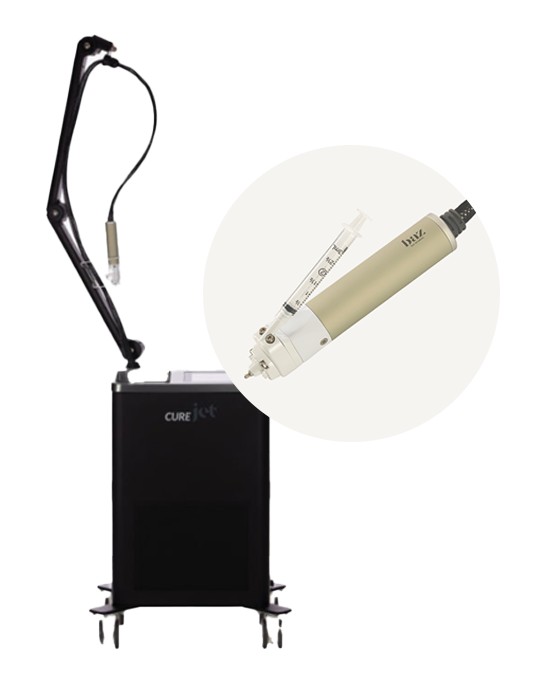
CureJet uses an electromagnetic system to create an extremely fast liquid microjet that penetrates the skin without a conventional needle.
When used in scar treatment, the jet can create a fine mechanical disruption within the scar — a micro-subcision-like effect — while simultaneously distributing a regenerative material through the dermis.
At SNU Plastic Surgery Clinic, we may combine CureJet with Juvelook Skin, a PDLLA and hyaluronic-acid based collagen-stimulating material.
The concept is simple:
Release. The high-speed microjet helps loosen fine scar attachments that are difficult to address repeatedly with a conventional needle.
Regenerate. Juvelook Skin is distributed through the treated dermis, where PDLLA provides a stimulus for gradual collagen remodeling.
Together, the two processes address both the mechanical distortion of the scar and the quality of the tissue around it.
Which scars can be treated without surgery?
Not every scar needs surgical revision.
Non-surgical treatment may be appropriate when the main problem is:
- uneven surface texture
- shallow or moderately depressed acne scars
- fine tethering beneath a scar
- selected linear or surgical scars where texture is more important than scar width
- enlarged pores and irregular skin surrounding the scar
In these cases, fractional laser, Potenza, CureJet or a combination may be used.
A wide scar, a strongly depressed scar, significant tissue displacement or a hypertrophic or keloid scar may require a different approach, including surgical scar revision.
The important decision is not which device is strongest, but whether the scar needs resurfacing, subcision, regeneration, surgery — or more than one of these.
A treatment plan for the type of problem
- 01
Pores with oily skin
Skin Botox may be useful when sebum production and superficial pore visibility are prominent.
- 02
Pores with rough texture
Potenza or fractional resurfacing may be used to stimulate more active dermal remodeling.
- 03
Pores with loss of elasticity
Thermage FLX or Sofwave may be added when reduced skin firmness is making pores more visible.
- 04
Acne scars
Potenza, fractional resurfacing and CureJet may be combined according to whether the scar is primarily superficial, depressed or tethered.
- 05
Fine linear or textural scars
When excision is unnecessary, CureJet with Juvelook Skin can be considered as a regenerative approach combining fine mechanical release with collagen stimulation.
- 06
Deeper or wider scars
Surgical scar revision or conventional subcision may be more appropriate before energy-based treatment is used to refine the surface.
What makes treatment here different
Treat the structure, not just the surface. A visible pore may reflect sebum, collagen loss or laxity. A scar may reflect surface damage, missing volume or tethering beneath the skin. Dr. Jeong and Dr. Lee assess these components before deciding how aggressively the skin should be treated.
This is particularly important with scars. Repeated resurfacing is not always the answer when the real problem lies beneath the surface.
Sometimes the better treatment is to release the scar first and then allow the skin to rebuild.
What to expect
- STEP 01
Assessment
We examine pore distribution, skin elasticity, scar depth and whether a scar is tethered to deeper tissue.
- STEP 02
Treatment selection
Skin Botox, fractional resurfacing, Potenza, CureJet with Juvelook Skin, Thermage FLX or Sofwave may be selected individually or combined.
- STEP 03
Treatment
More regenerative treatments intentionally create a controlled injury or mechanical stimulus. Temporary redness, swelling, pinpoint crusting or tenderness can therefore occur.
- STEP 04
Remodeling
Pore and scar treatment is gradual. The visible change continues as collagen remodels over the following weeks and months.
Frequently asked questions
- Q1
Can pores really become smaller?
Their appearance can improve, but pores are normal anatomical structures and cannot simply be erased. Treatment works by reducing factors that make them more visible — including excess sebum, irregular texture and loss of support around the pore.
- Q2
Which is better for pores: Potenza or Skin Botox?
They work differently. Skin Botox is useful when a relatively quick improvement in sebum and pore visibility is wanted. Potenza creates controlled dermal remodeling and is more appropriate when enlarged pores are associated with rough texture, acne scars or structural changes in the skin. They can also be combined.
- Q3
Can Thermage or Sofwave treat pores?
They are not primarily pore treatments. However, when reduced skin elasticity is making pores look larger, improving the firmness of the surrounding skin can make them less visible. This is why we sometimes combine elasticity-focused treatment with more direct pore remodeling.
- Q4
Why combine CureJet with Juvelook Skin for scars?
They provide two different effects. The CureJet microjet can create a fine mechanical release within selected scar tissue while distributing the material through the dermis. Juvelook Skin contains PDLLA and hyaluronic acid and is used to support gradual collagen remodeling. The aim is therefore not simply to fill the depression, but to release abnormal scar architecture and encourage the tissue to rebuild.
- Q5
Is CureJet the same as conventional subcision?
No. Conventional subcision uses a needle or cannula to physically cut stronger fibrous bands and is more appropriate for some deeply tethered scars. CureJet creates a much finer needle-free mechanical effect and can be useful when numerous small areas of textural tethering need to be treated together with regenerative delivery. The two techniques can complement rather than replace one another.
- Q6
When does a scar need surgery?
A scar may need surgical revision when it is too wide, deeply displaced, strongly tethered or structurally unsuitable for resurfacing alone. For scars in which altered texture is the main problem, non-surgical remodeling is often considered first. The treatment is chosen according to the architecture of the scar rather than its age alone.
Begin with
a conversation.
Consultations are led by Dr. Jeong or Dr. Lee, with our medical team supporting you throughout your visit. Appointments are recommended so that you can be seen without waiting, in English or Korean.
Results and recovery times vary from person to person, and every medical procedure carries potential side effects. The information on this page is provided for general guidance only and does not replace an in-person consultation. Please consult with our doctors for advice specific to your case.