
Facial Rejuvenation
Neck & Double Chin Lift
이중턱거상(미니거상)A mini lift for the jawline and neck that treats fat, muscle and skin together, so that the border between face and neck is defined again from every angle.

The neck and double chin lift
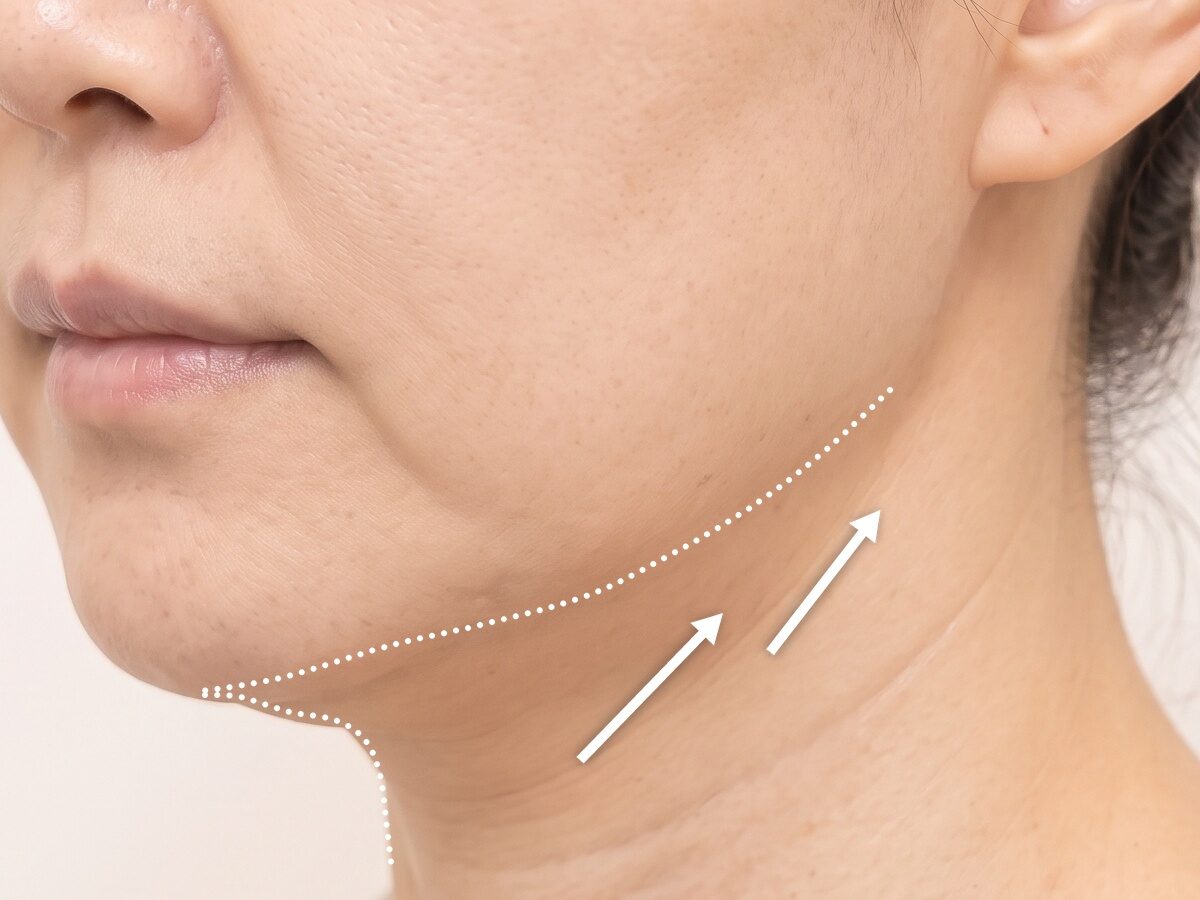
The neck and double chin lift, sometimes called a mini lift, corrects the three causes of a heavy jawline at the same time: excess fat beneath the chin, a loosened platysma muscle and sagging skin. The result is a firmer, cleaner line from chin to neck.
Liposuction alone can remove fat, but it cannot tighten a lax muscle or lift skin that has lost its elasticity. By correcting these underlying causes together, the procedure aims for a contour that looks natural and smooth whichever way the head turns.
At SNU Plastic Surgery Clinic the lift is performed through minimal incisions to limit scarring, with a technique planned from the anatomy of each patient's neck. The guiding principle is the same as for every lift we perform: restore structure while preserving natural expression.
Who this procedure is for
- 01
Fat beneath the chin
Excess fat under the chin creates a prominent double chin, regardless of body weight.
- 02
Loss of elasticity with age
The skin and muscle along the jawline have loosened, and the neck has lost its definition.
- 03
Skin left behind after contouring or liposuction
After facial contouring surgery or liposuction, loose skin has left a double chin in place.
- 04
A short or receding chin
The chin is short or set back, so the neck reads as a double chin for structural reasons.
How the surgery proceeds
- STEP 01
Fat removal
Fat beneath the chin is dissolved and removed by suction.
- STEP 02
Muscle tightening
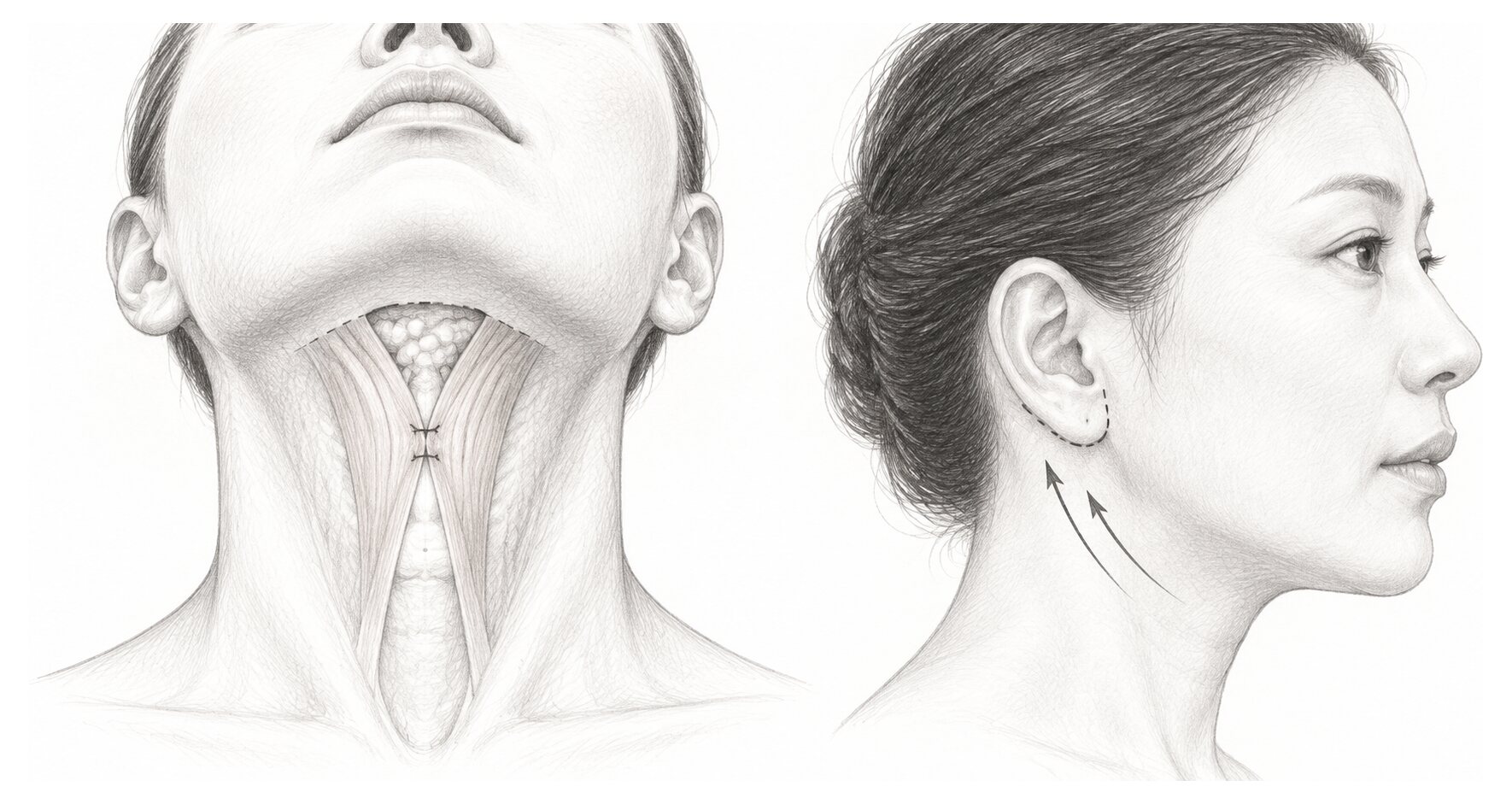
The loosened platysma muscle is gathered and sutured firmly, rebuilding the support beneath the chin.
- STEP 03
Fixation below the ear
The entire jawline is secured firmly, extending to the line below the ear, so that the lift is held by the deeper tissues rather than by the skin.
Why the jawline blurs
Planning starts from tissue structure, because a double chin has more than one cause.
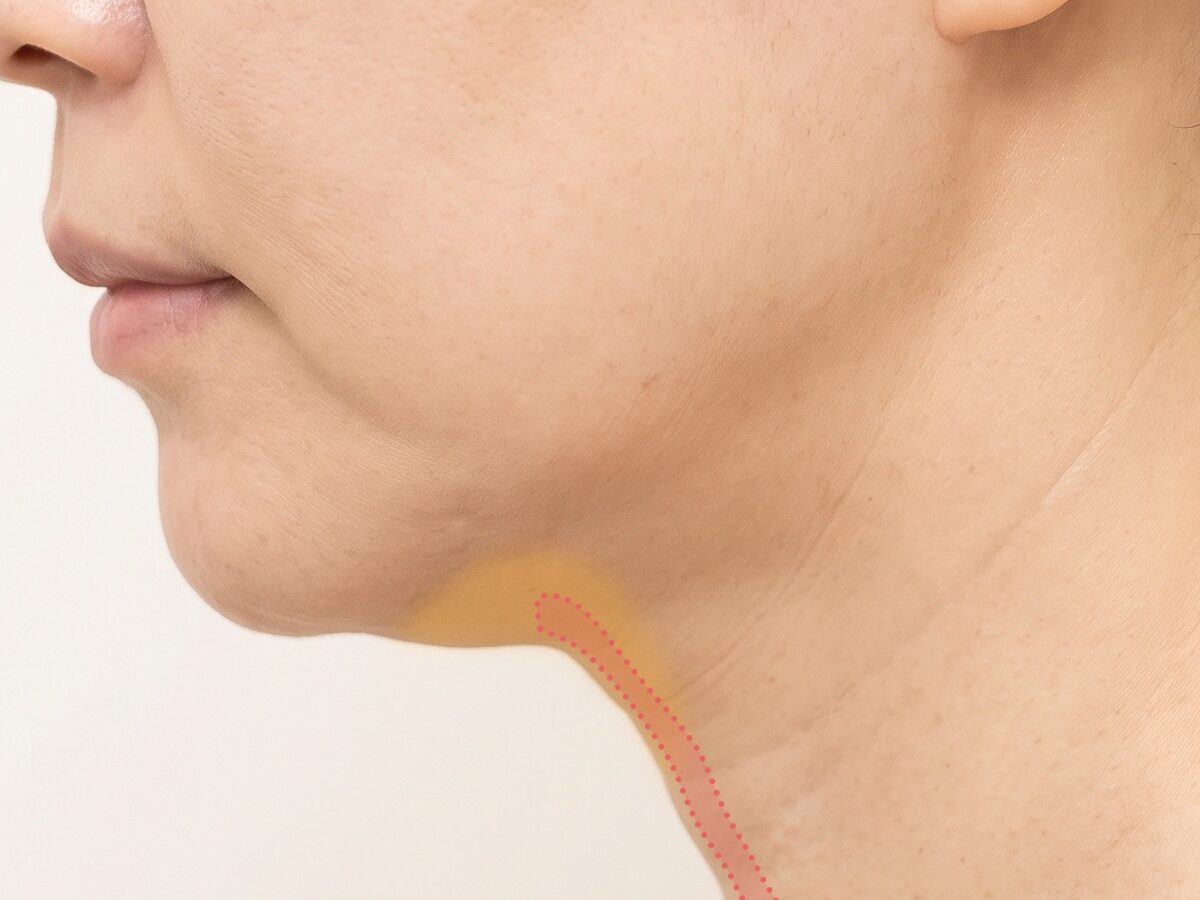
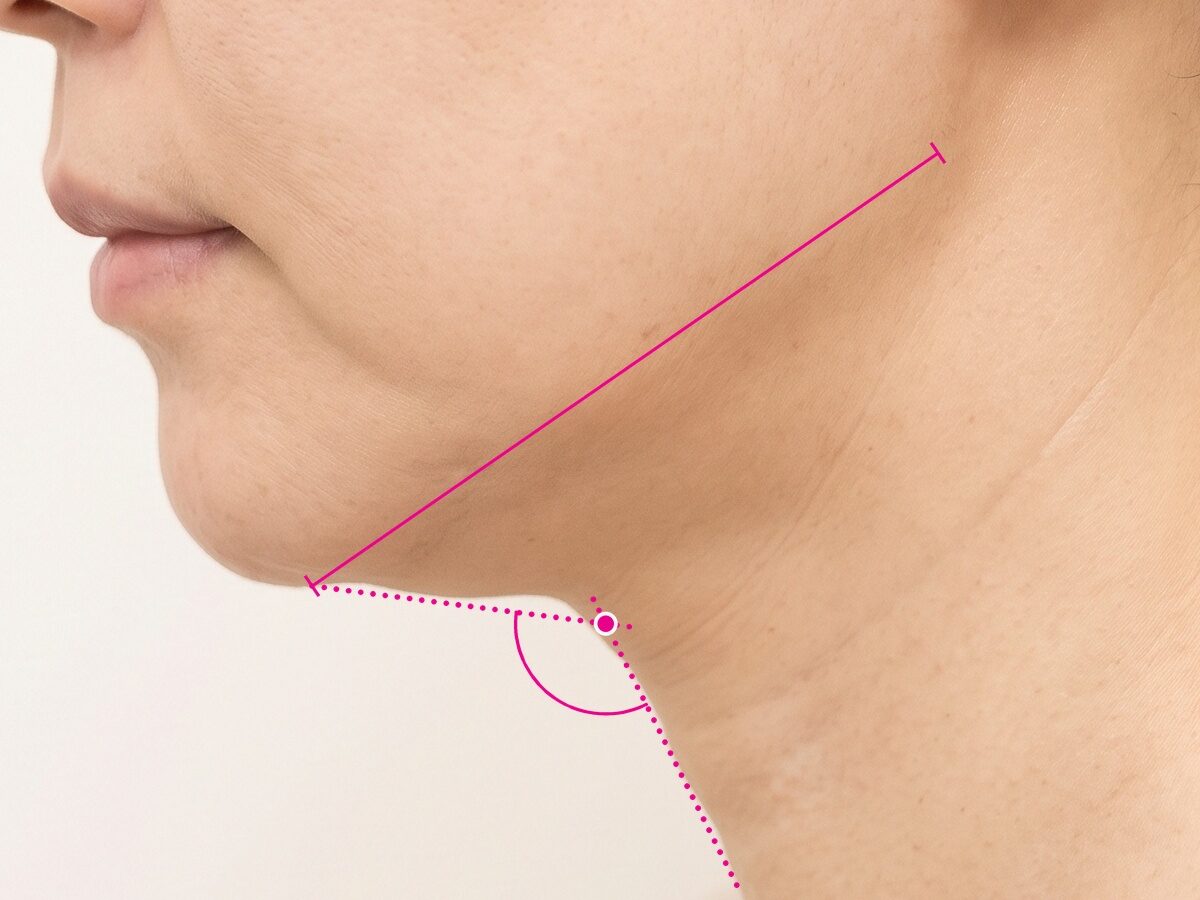
The line between face and neck depends on four things: the skin, the fat above and below the platysma, the muscle itself, and the bone of the jaw and chin. When any of them changes, the angle beneath the chin opens and the jawline loses its edge.
With age, the skin thins and stretches, fat accumulates or shifts beneath the chin, and the platysma loosens and can separate into visible bands. The retaining ligaments of the jaw stretch, letting cheek tissue settle into jowls that interrupt the line.
Bone matters too. A chin that is short or set back gives the soft tissue less to drape over, which is why some younger patients with little fat still see a double chin.
Your doctor examines each of these layers separately in consultation. The findings decide whether fat removal, muscle tightening, skin lifting or all three are needed, and where restraint is the better choice.

What makes our neck and double chin lift different
- SPECIAL 01
Diagnosis based on anatomy
The structure of the muscle, fat and skin layers is assessed and the anatomical cause identified precisely, so that the double chin is corrected at its origin rather than at the surface.
- SPECIAL 02
Minimal incisions, minimal scarring
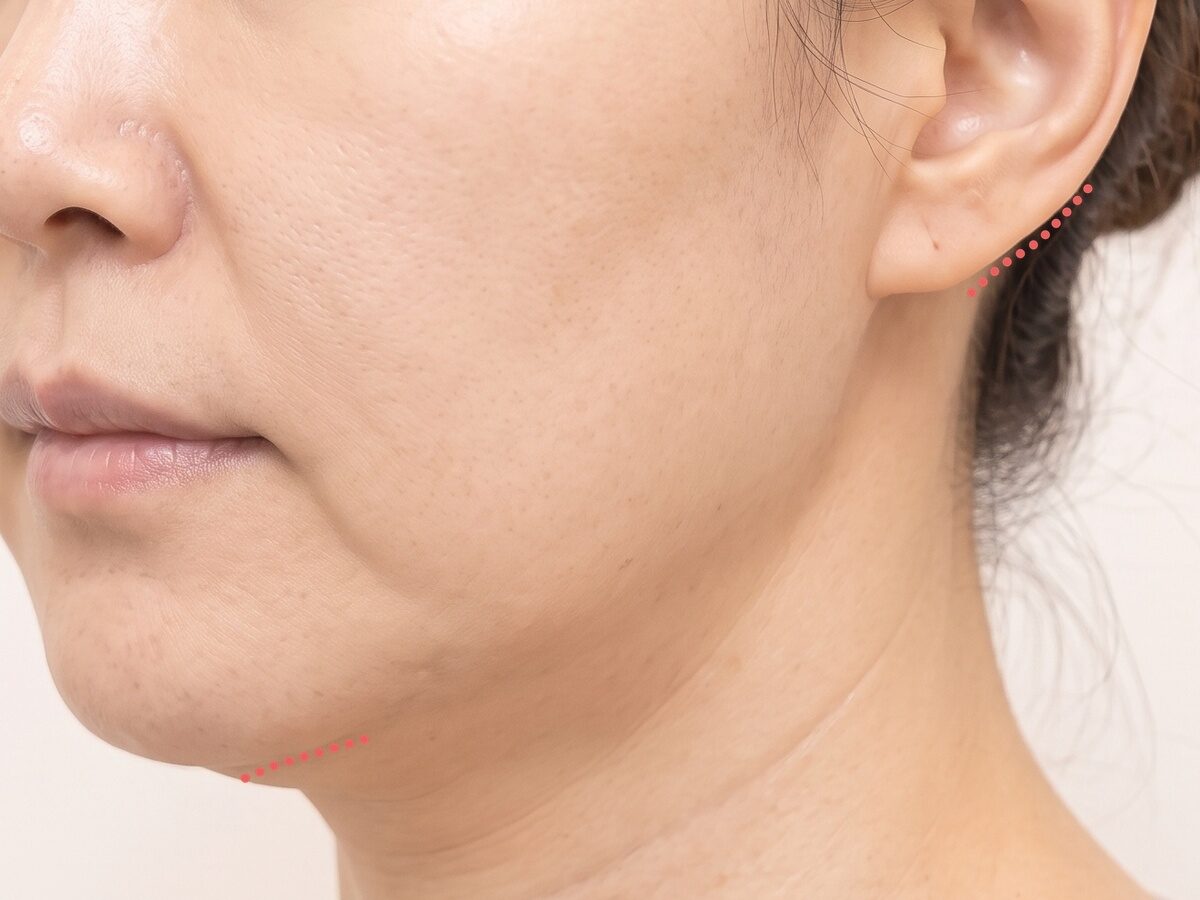
Incisions are placed only in inconspicuous locations, reducing visible scarring after surgery and supporting a faster recovery.
- SPECIAL 03
Led by our physicians
Consultations and procedures are led by Dr. Jeong or Dr. Lee, supported by our medical team. Read more about our doctors.
- SPECIAL 04
Tailored care before and after surgery
From diagnosis through surgery and the recovery period, thorough aftercare reduces discomfort and supports a steady course of healing.
Consultation, surgery and recovery: what to expect
- STAGE 1
Consultation
Your doctor examines the neck at rest and with the head turned and tilted, assessing the amount and depth of fat, the tone of the platysma, the elasticity of the skin and the projection of the chin. Where jowls or cheek descent contribute, a facelift may be the more complete answer; where only the neck has changed, the mini lift stands alone.
- STAGE 2
Surgery
Fat beneath the chin is removed, the platysma is tightened, and the jawline is secured to below the ear, all through small incisions in inconspicuous positions.
- STAGE 3
Recovery
Swelling and tightness beneath the chin are expected in the first days and settle gradually. Bruising and altered sensation in the neck are common early on and usually improve with time. Follow-up visits monitor healing and the settling of the contour.
- STAGE 4
The settled result
The jawline continues to refine as the swelling resolves. Results depend on skin quality, bone structure and weight stability, and vary from person to person.
Frequently asked questions
- Q1
Is this the same as liposuction of the chin?
No. Liposuction removes fat only. This lift also tightens the platysma muscle and lifts the skin, which is why it helps patients who have already had liposuction and still see a double chin.
- Q2
Where are the incisions?
Only in inconspicuous positions, chosen so that the healed scars are difficult to see. The exact placement depends on what the surgery needs to address and is explained at consultation.
- Q3
Will my neck look tight or unnatural?
The muscle carries the correction, not the skin, so the neck is designed to move and look natural. Restraint in how much fat is removed matters as much as the lift itself; an over-treated neck looks operated on rather than rested.
- Q4
I have a small chin. Will a lift be enough?
Sometimes not. When the chin is short or set back, the double chin is partly structural, and Dr. Jeong may discuss options for the chin itself alongside, or instead of, the lift. The right procedure is not always the larger one.
- Q5
When is a full facelift the better choice?
When the cheeks and jowls have descended as well, the neck lift alone corrects only part of the picture. In that case a facelift, which treats the lower face and neck together, may be recommended; a midface lift addresses the center of the face.
Begin with
a conversation.
Consultations are led by Dr. Jeong or Dr. Lee, with our medical team supporting you throughout your visit. Appointments are recommended so that you can be seen without waiting, in English or Korean.
Results and recovery times vary from person to person, and every medical procedure carries potential side effects. The information on this page is provided for general guidance only and does not replace an in-person consultation. Please consult with our doctors for advice specific to your case.