Facial Rejuvenation
Facelift
안면거상A facelift that repositions the deeper supporting layers of the face, not only the skin. The cheeks and jawline regain their contour, and the face still looks like you, rested.

The facelift
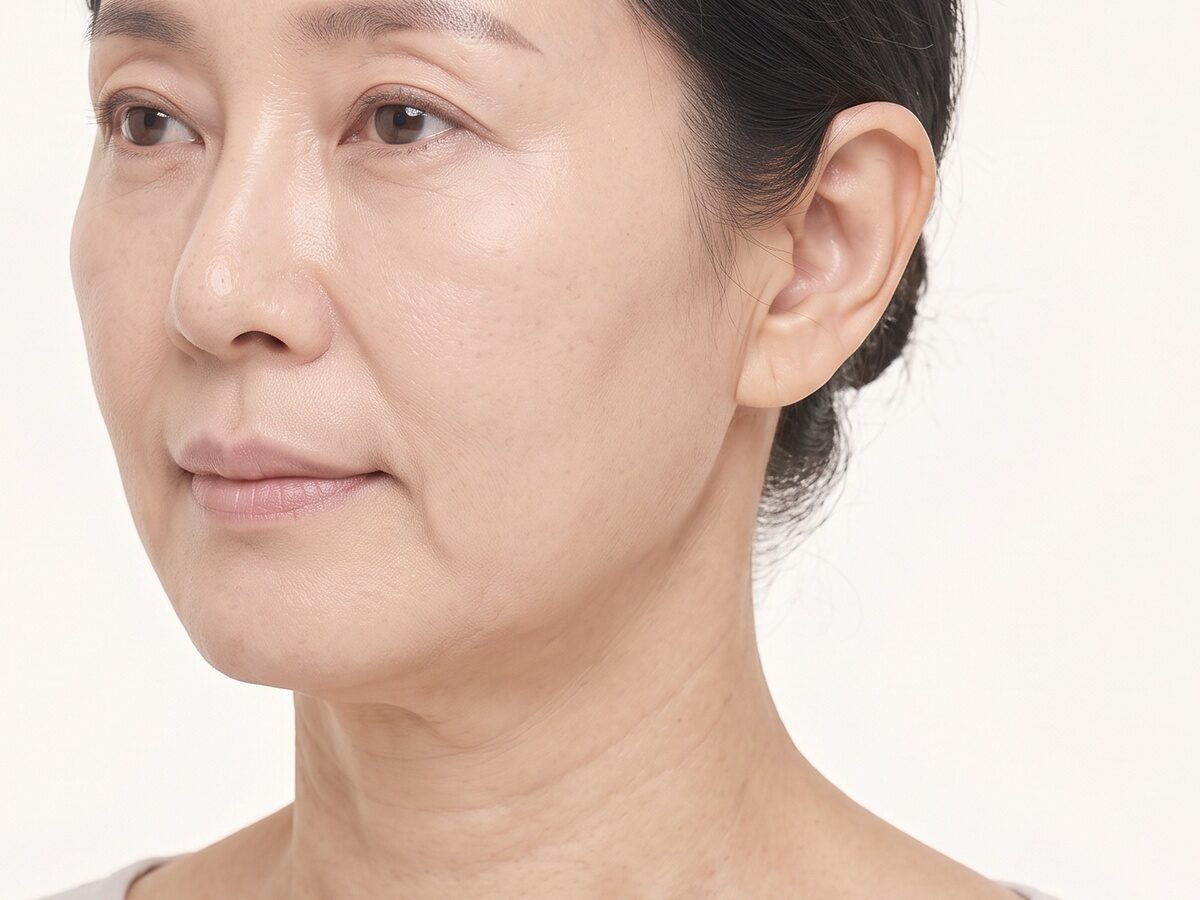
Facial aging is no longer a concern of one age group. Early laxity can appear in the twenties and thirties, while deeper folds and a softened jawline are more typical after fifty.
SNU Plastic Surgery Clinic tailors the facelift to the age, tissue quality and facial structure of each patient. A procedure suited to early sagging differs in extent and technique from one designed for established jowls and a loose neck.
The intent is the same in every case: restore structure while preserving natural expression. A good facelift is not recognized as surgery. It is recognized as a face that looks well.

Correcting aging at its root
Pulling on the skin alone cannot correct facial sagging. Skin is the outermost layer and the least responsible for the descent; tightened on its own, it cannot hold the deeper tissue in place and can look unnaturally flat.
The facelift performed at the clinic lifts the skin, the fat layer and the fascial layer (SMAS) together. Repositioning the layers that actually carry the weight of the face gives a stronger correction, and one that is designed to last longer.
How the face ages, layer by layer
Planning starts from tissue structure, because each layer of the face changes in its own way.
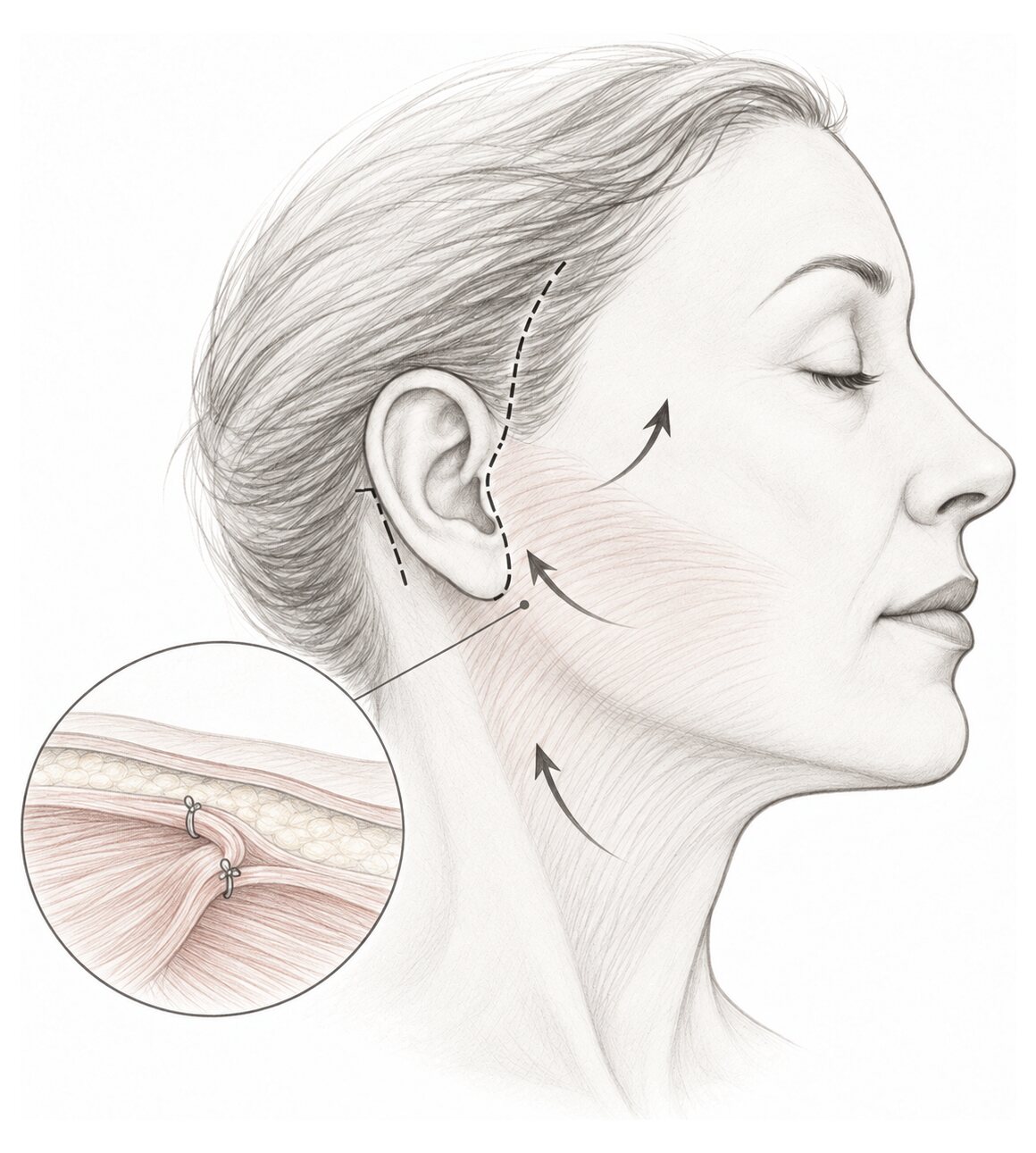
The face is built in layers: skin, subcutaneous fat, the SMAS fascial layer with the muscles of expression beneath it, and the bone that supports all of them. Retaining ligaments run from bone through these layers to the skin and hold the soft tissue in place.
With age, each layer changes. The skin thins and loses elasticity, and the fat compartments lose volume and slide downward.
The SMAS loosens and the ligaments lengthen, so the soft tissue settles toward the jaw and the folds beside the mouth deepen. The bony frame itself recedes a little, leaving less support.
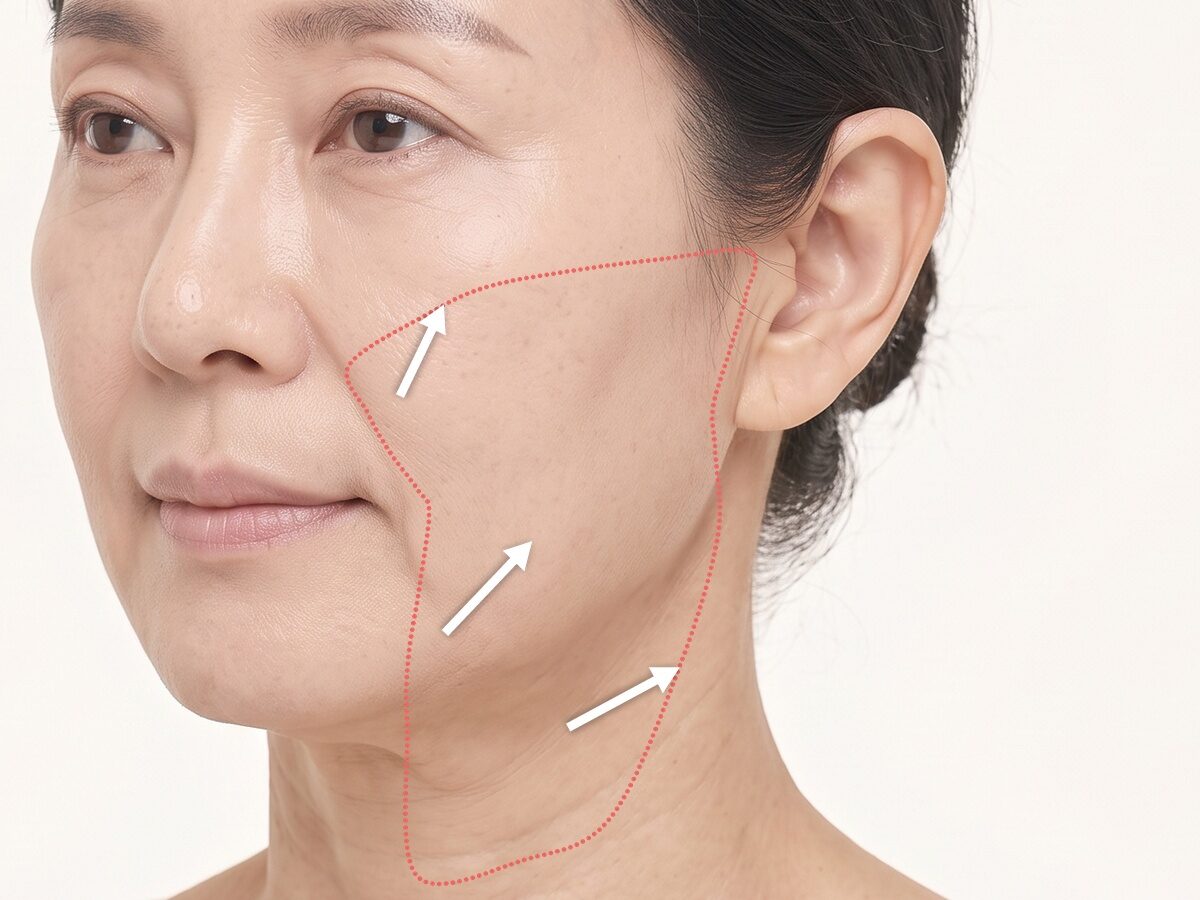
This is why a facelift is a structural operation. It re-suspends the layers that have descended and returns them to where the bone can support them, while the skin is simply redraped without tension.
Your doctor plans each lift from this anatomy: which layer has moved, in which direction, and how much correction is enough. Knowing what not to change is as important as knowing what to lift.
Every layer lifted together, including the fascia
For an effective and lasting correction, the tissues of each facial layer, including the fascial layer, are lifted and fixed together, in a direction chosen for the individual's features and muscle pattern.
The advantage is twofold. The result looks natural, because the layers move as one, the way they sat before they descended. And it holds longer, because the load is carried by the fascia rather than by the skin.
Lifting the layers as a unit also means the skin can be closed without tension, which is one reason the incision around the ear tends to heal quietly.
Who this procedure is for
- 01
Sagging cheeks
Descended cheek tissue makes the face look heavy and older than you feel.
- 02
Deep folds beside the mouth
The nasolabial folds and the lines at the corners of the mouth have deepened enough to change the expression at rest.
- 03
A blurred jawline
Jowls and fullness under the chin have softened the border between face and neck.
- 04
A previous lift that fell short
An earlier lifting procedure produced too little change or did not last, and you want a structural correction.
Key points of our facelift
- POINT 1
A defined jawline and restored dimension
Sagging cheek tissue and the double chin line are repositioned to recover a clear contour and the natural three-dimensional shape of the face.
- POINT 2
Softer folds around the mouth
Because the cheek is lifted as part of the procedure, the nasolabial folds and the lines beside the mouth improve as well, and the overall expression reads as naturally more rested.
- POINT 3
An incision hidden behind the ear
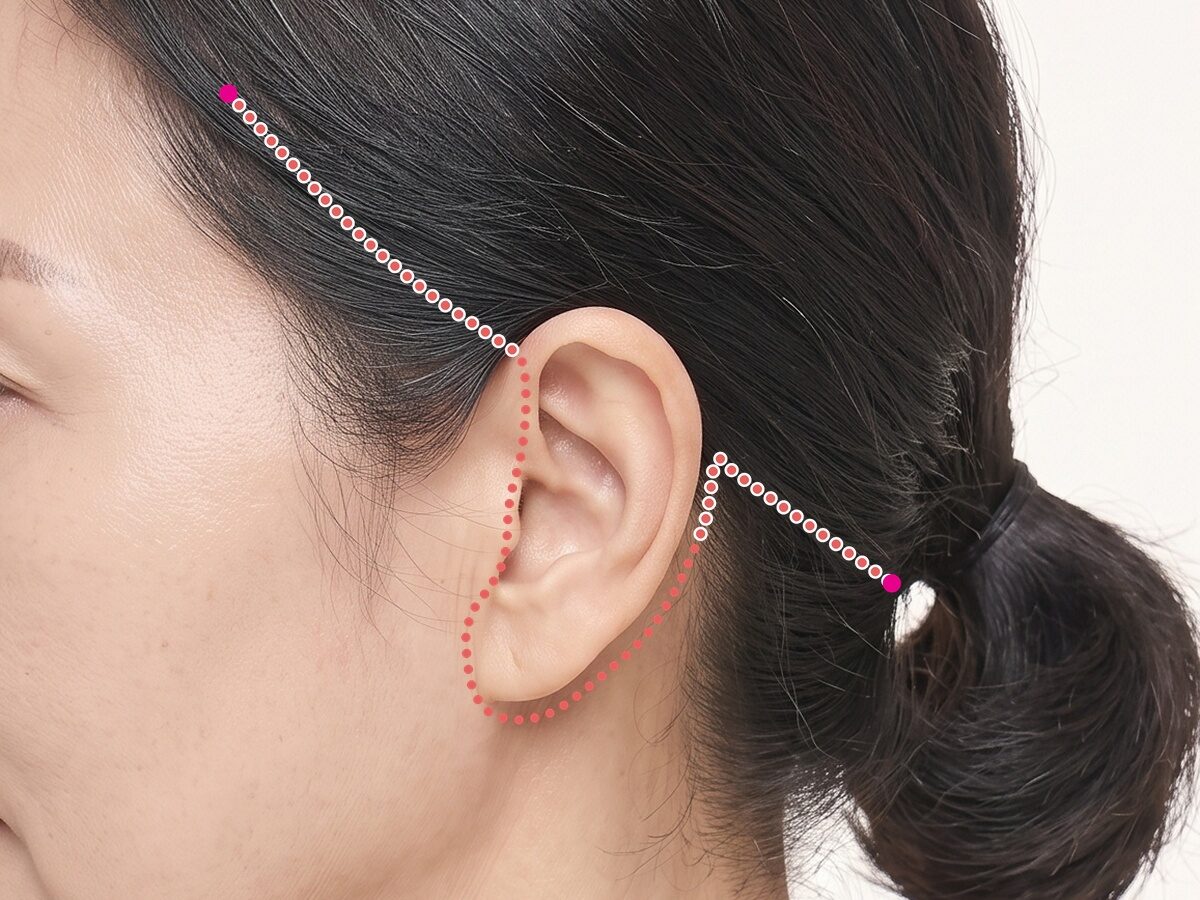
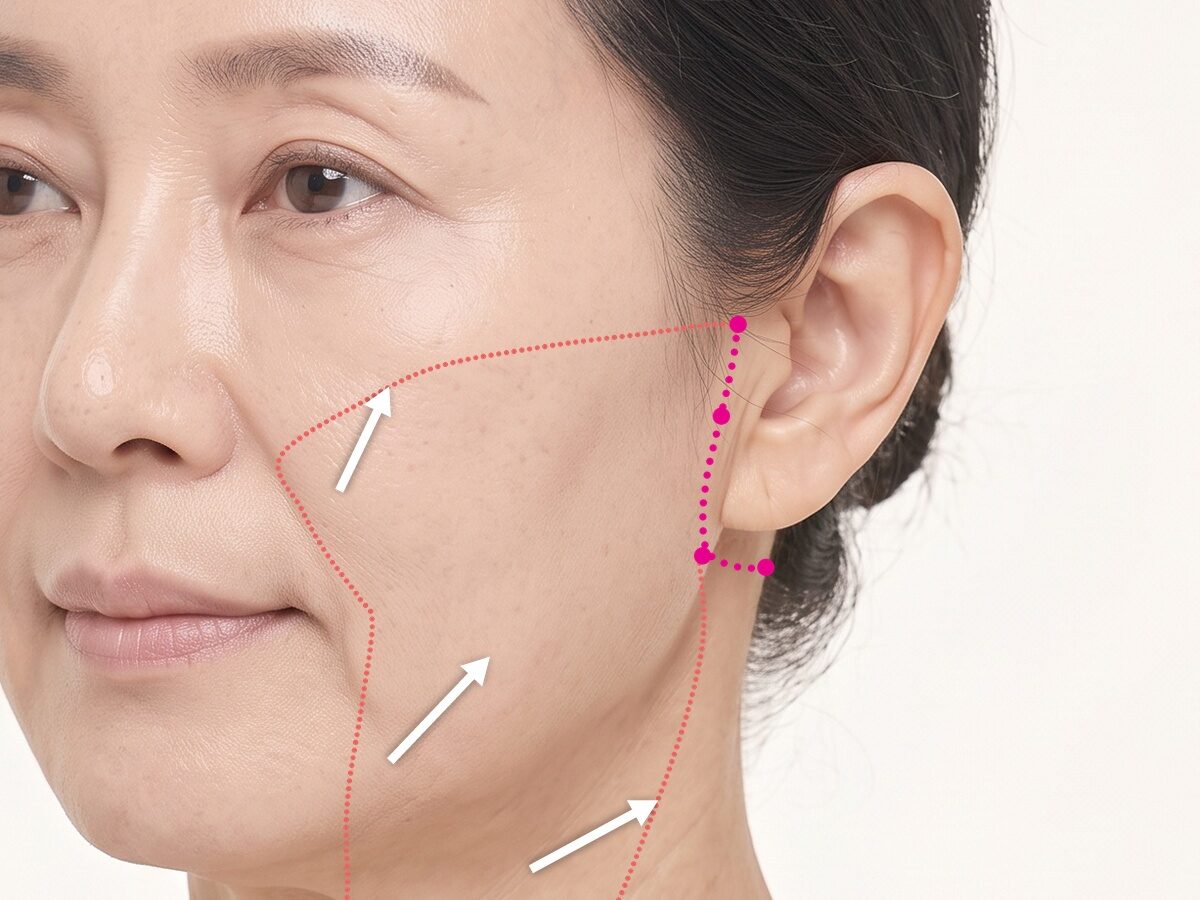
The incision is placed along the line behind the ear and closed with care, so that the resulting scar is difficult to see once healed.
What makes our facelift different
- SPECIAL 01

Planning that anticipates problems
Potential risks are identified before surgery, and the whole process is planned in a systematic way. Predictability is designed in from the start rather than hoped for.
- SPECIAL 02

Safety-centered care through recovery
Care continues through the recovery phase, with attention to pain control and to reducing the chance of complications. Patient safety and comfort come first.
- SPECIAL 03
Precision built on anatomy
The lift is based on a precise understanding of the SMAS and the surrounding soft tissue, so that the cause of sagging is corrected rather than masked. Each facelift is adapted to the anatomy in front of us.
- SPECIAL 04

Led by our physicians
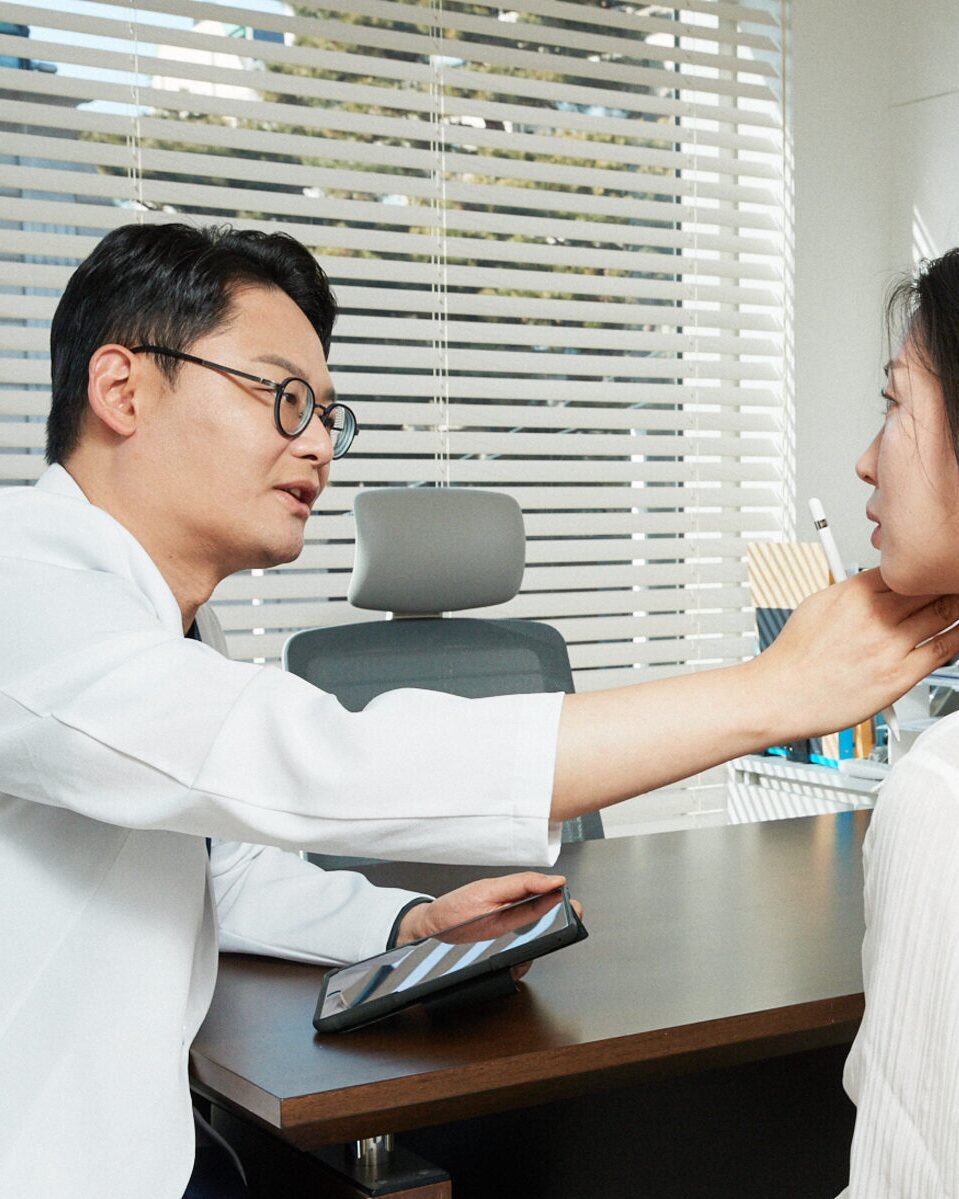
Consultations and procedures are led by Dr. Jeong or Dr. Lee, supported by our medical team. Read more about our doctors.
Consultation, surgery and recovery: what to expect
- STEP 01
Consultation
Your doctor examines the face at rest and in motion: the position of the cheek fat, the depth of the folds, the jawline and neck, and the quality of the skin. The extent of the lift is discussed openly, including what a facelift cannot do.
- STEP 02
Planning
The layers to be lifted, the direction of the lift and the placement of the incision are decided for your anatomy. Where the neck, brow or midface contribute to the aging pattern, combining procedures may be discussed.
- STEP 03
Surgery
Through an incision along the line behind the ear, the skin, fat and SMAS layer are lifted and fixed together. The skin is then redraped without tension and closed carefully.
- STEP 04
Early recovery
Swelling and bruising are expected in the first days and gradually settle. Tightness and altered sensation around the ears and cheeks are common early on and usually improve with time. Follow-up visits monitor healing.
- STEP 05
The settled result
The contour continues to refine as the swelling resolves over the following weeks. Results vary with age, skin quality and bone structure, and aging continues after surgery.
Frequently asked questions
- Q1
Will my face look pulled?
A pulled look comes from tightening the skin. Because this facelift carries the tension in the SMAS layer and lets the skin sit naturally, the expression remains yours. Restraint in the amount of lift matters as much as technique.
- Q2
Where will the scar be?
Along the line behind the ear, within its natural creases. The scar fades over time and is generally difficult to see once healed, though healing varies from person to person.
- Q3
Am I too young, or too old, for a facelift?
Age itself is not the deciding factor; the pattern and degree of tissue descent is. Early laxity in the thirties may suit a limited lift, while established jowls after fifty may call for a fuller procedure. The consultation determines which.
- Q4
How long will the result last?
Lifting the fascial layer is designed to hold longer than a skin-only or non-surgical lift, but no procedure stops aging. How long the change remains visible depends on skin quality, bone structure, weight stability and habits such as sun exposure and smoking.
- Q5
Can it be combined with other procedures?
Yes. A facelift is often planned with a neck and double chin lift, a midface lift or an endoscopic brow lift when those areas contribute to the change, and sometimes with eyelid surgery. Dr. Jeong will advise on what is appropriate and what is unnecessary.
Begin with
a conversation.
Consultations are led by Dr. Jeong or Dr. Lee, with our medical team supporting you throughout your visit. Appointments are recommended so that you can be seen without waiting, in English or Korean.
Results and recovery times vary from person to person, and every medical procedure carries potential side effects. The information on this page is provided for general guidance only and does not replace an in-person consultation. Please consult with our doctors for advice specific to your case.