
Eye Surgery
Dynamic Double Eyelid Surgery
다이나믹쌍꺼풀수술A double eyelid that behaves like a natural one: defined when the eyes are open, smooth when they close. For patients who want a crease that shows no sign of having been made.

What dynamic double eyelid surgery is
Dynamic double eyelid surgery, also called dynamic crease surgery, creates an upper eyelid crease by connecting the skin to the elastic fascial tissue that moves with the muscle that opens the eye. Because the anchor point itself moves, the crease moves with it.
The result is a line that forms cleanly when the eyes open and disappears smoothly when they close. In conventional techniques the crease is fixed to firm tissue, which is why a closed eye can show a fold, a dimple or a pull at the point of fixation.
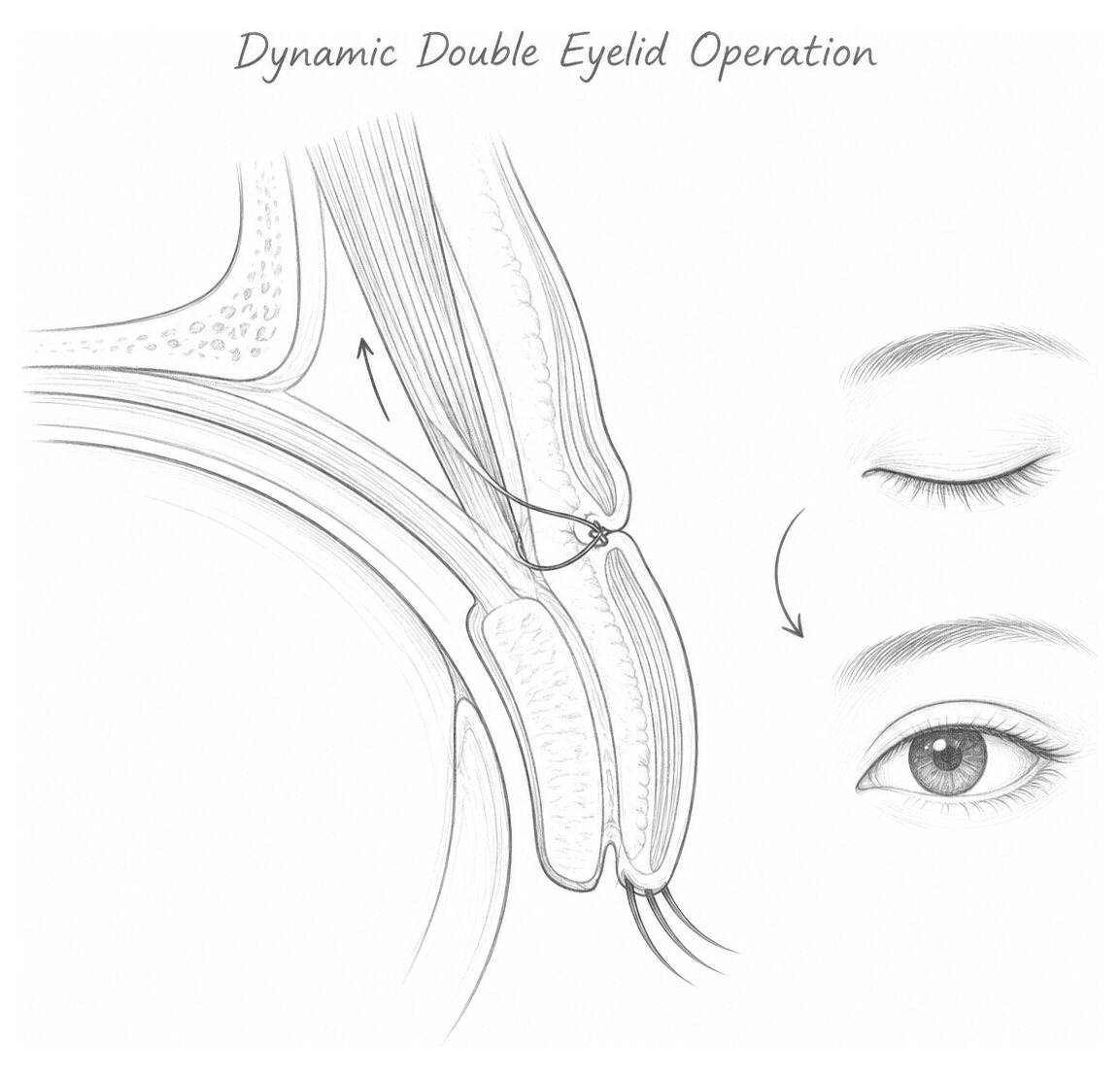
Defined when open, smooth when closed
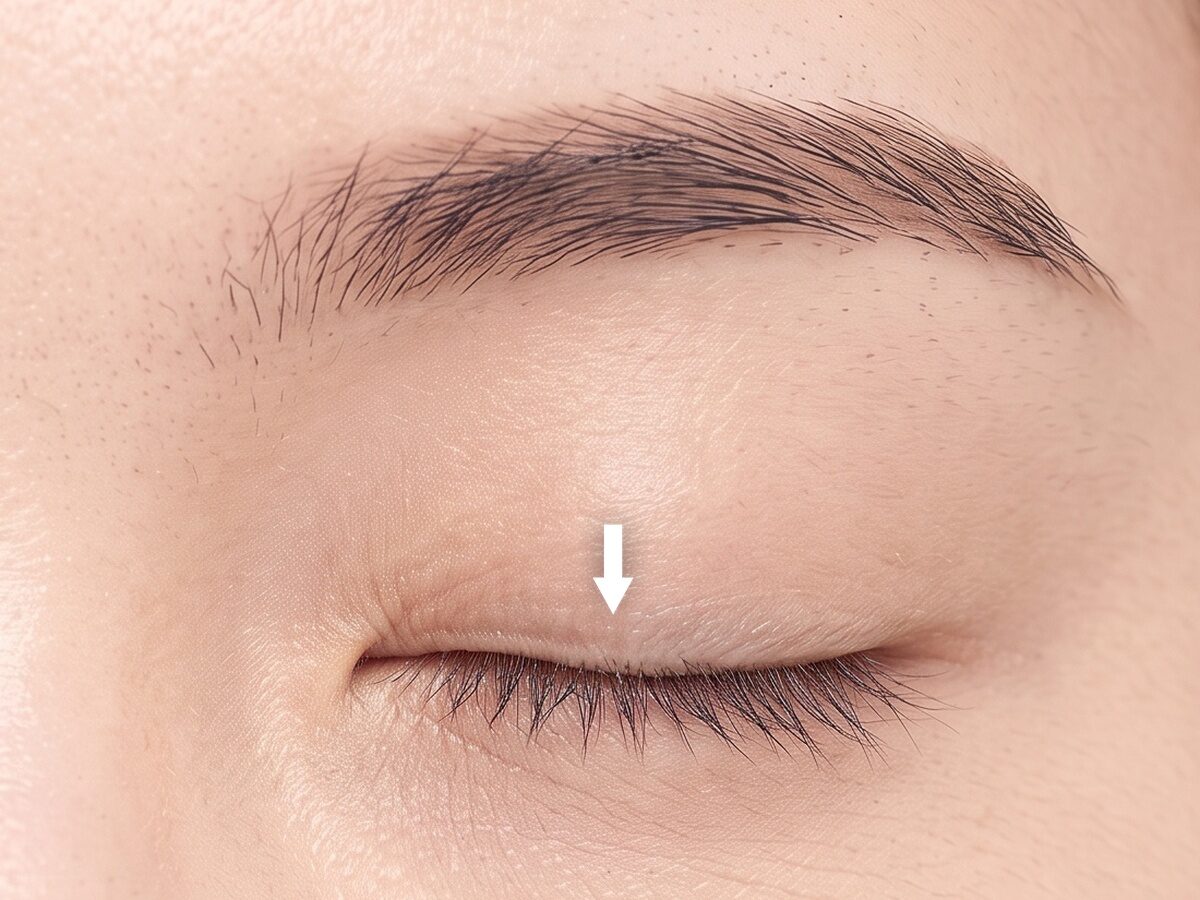
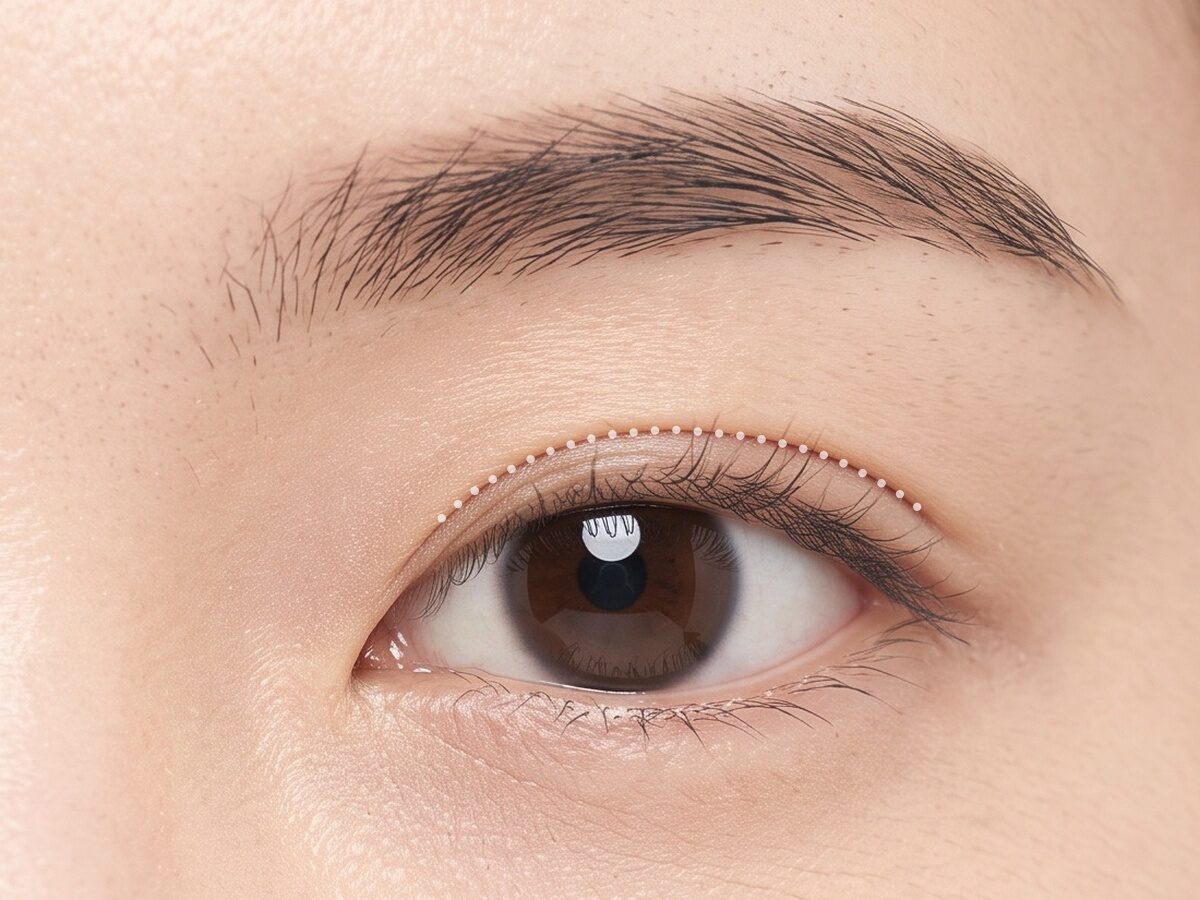
An upper eyelid crease is judged twice: once with the eyes open, when it should read as a clean, even line, and once with the eyes closed, when ideally nothing should show at all.
Many patients are happy with their crease when looking straight ahead, but conscious of the fold or dent that appears when they look down or close their eyes for a photograph.
The dynamic technique is designed for that second moment. The skin is joined to tissue that glides with the eye rather than to a fixed point, so the lid stays smooth on closing.
Who this procedure is for
- 01
A crease that folds when the eyes close
Your crease looks fine with the eyes open, but folds, dents or looks awkward when you close them or look down.
- 02
Concern about an artificial line
You want to avoid, or revise, a double eyelid line that looks obviously surgical or fixed in place.
- 03
Natural definition in both positions
You would like a clear line when the eyes are open and a smooth lid when they are closed.
- 04
A refined result with no trace of surgery
You are after a subtle, precise result that does not announce itself, with a short recovery.
Conventional method vs dynamic double eyelid surgery
Both techniques create a crease. The difference lies in what the skin is anchored to, and in how the lid behaves when it moves.
| Aspect | Conventional method | Dynamic double eyelid surgery |
|---|---|---|
| Fixation | Fixed to firm, non-moving tissue | Connected to fascia that moves with the eye |
| Eyes closed | Fixation marks or a pulled appearance | Closes smoothly, without a fold |
| Signs of surgery | Fixation points may reveal that surgery was done | Natural appearance with little sign of surgery |
| Movement | A constant, stiff line | Responds naturally as the eye moves |
Key points of the technique
- POINT 1
A spring-like connection
The skin is connected to fascial tissue rather than to a rigid anchor, so the crease flexes with each opening and closing of the eye instead of holding a fixed position.
- POINT 2
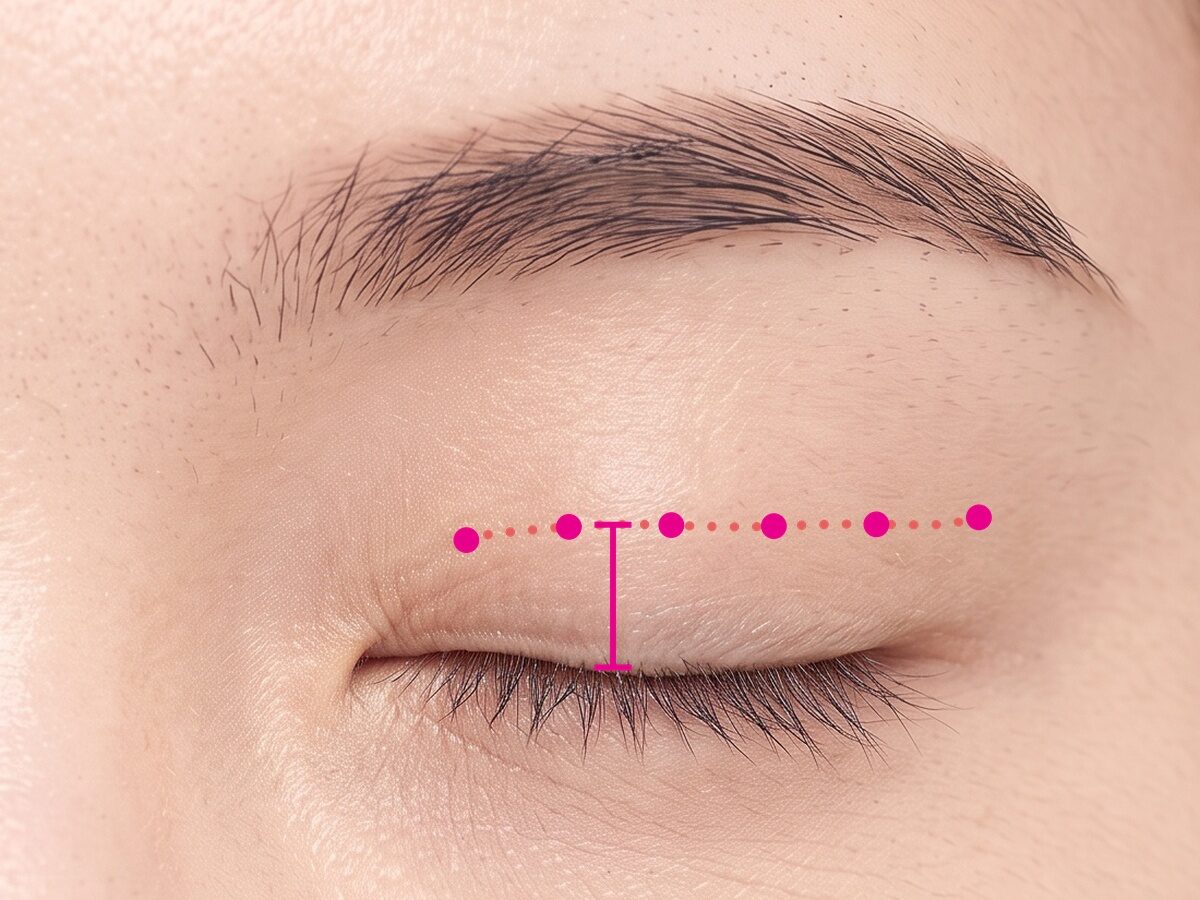
Height adjusted to the millimeter
The crease can be set anywhere from a subtle inner fold at 4–5 mm to a clearly visible line at 8–9 mm. The height is chosen according to the structure of your eye and the impression you would like.
Choosing the crease line
Three commonly requested line types, defined by height and by where the crease begins at the inner corner. The choice depends on lid thickness, brow position and how you wear makeup.
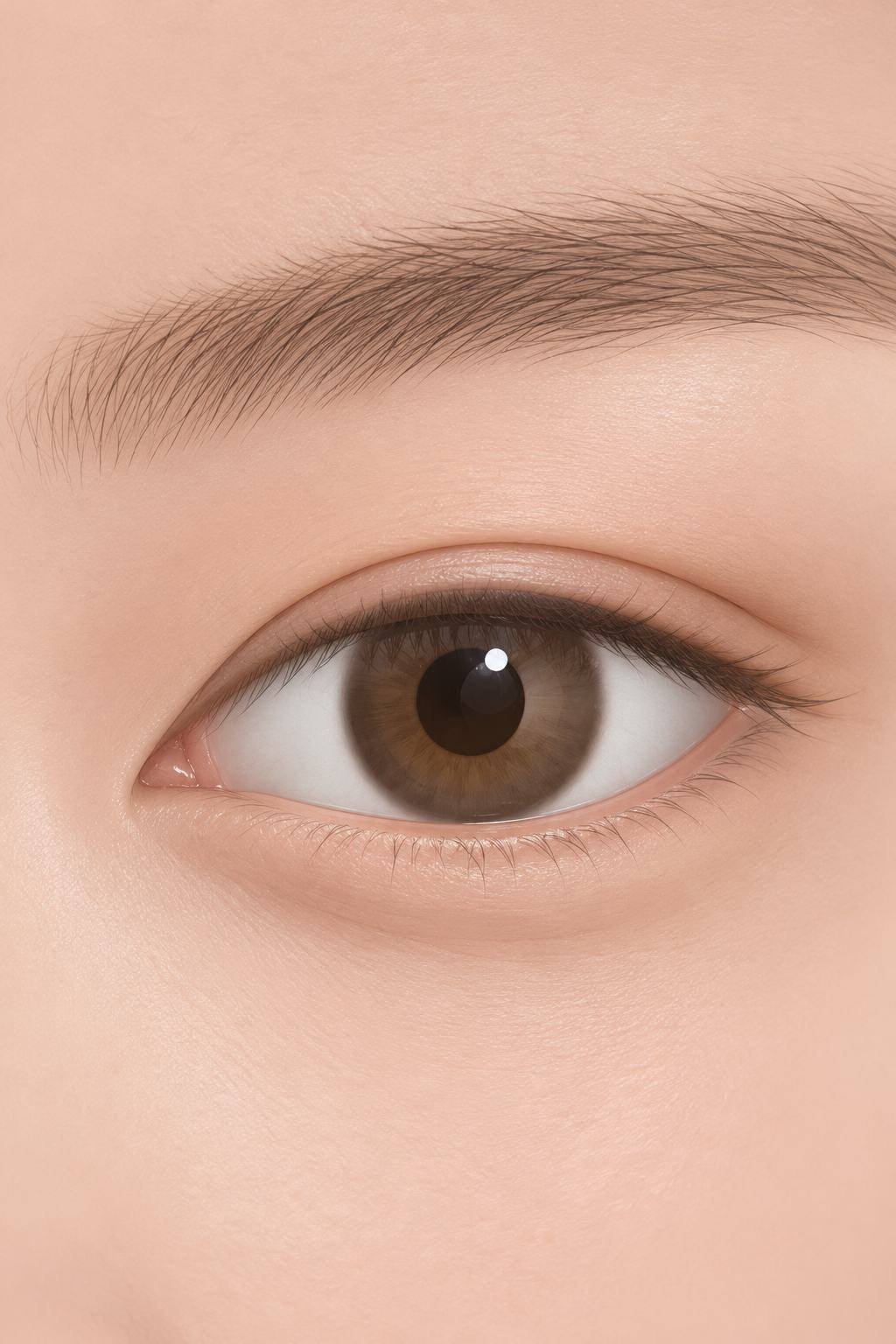
In-line (6–7 mm)
The crease begins inside the fold of the inner corner, giving the look of a subtle, natural inner double eyelid.

In-out line (7–8 mm)
The crease starts inside and opens slightly toward the outer half of the eye, a refined line that reads as natural at conversational distance.
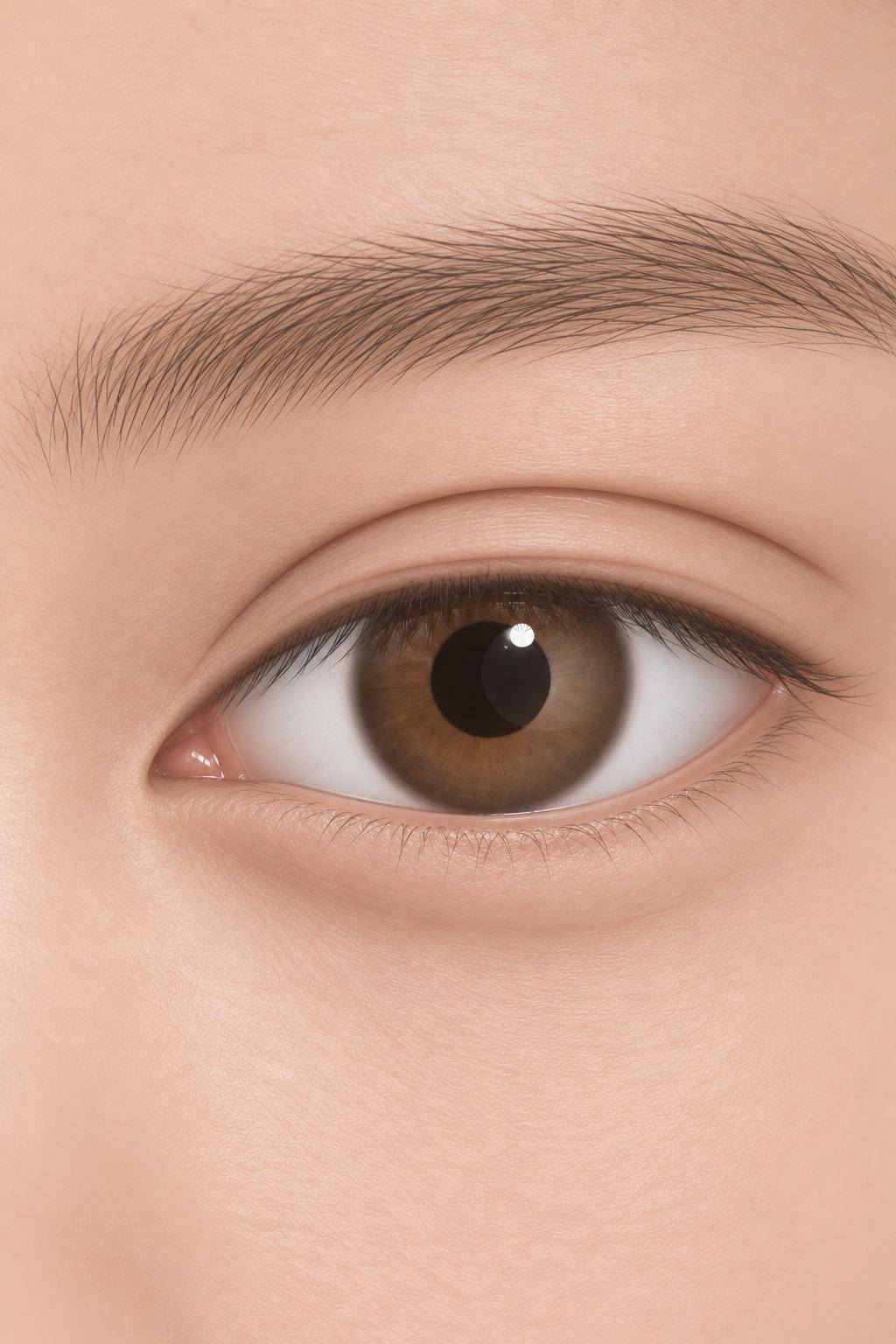
Semi-out to out line (8–8.5 mm)
A more visible line with a wider lid platform. It emphasizes the eyeline and suits patients who wear defined eye makeup.
What makes the clinic's approach different
- SPECIAL 01
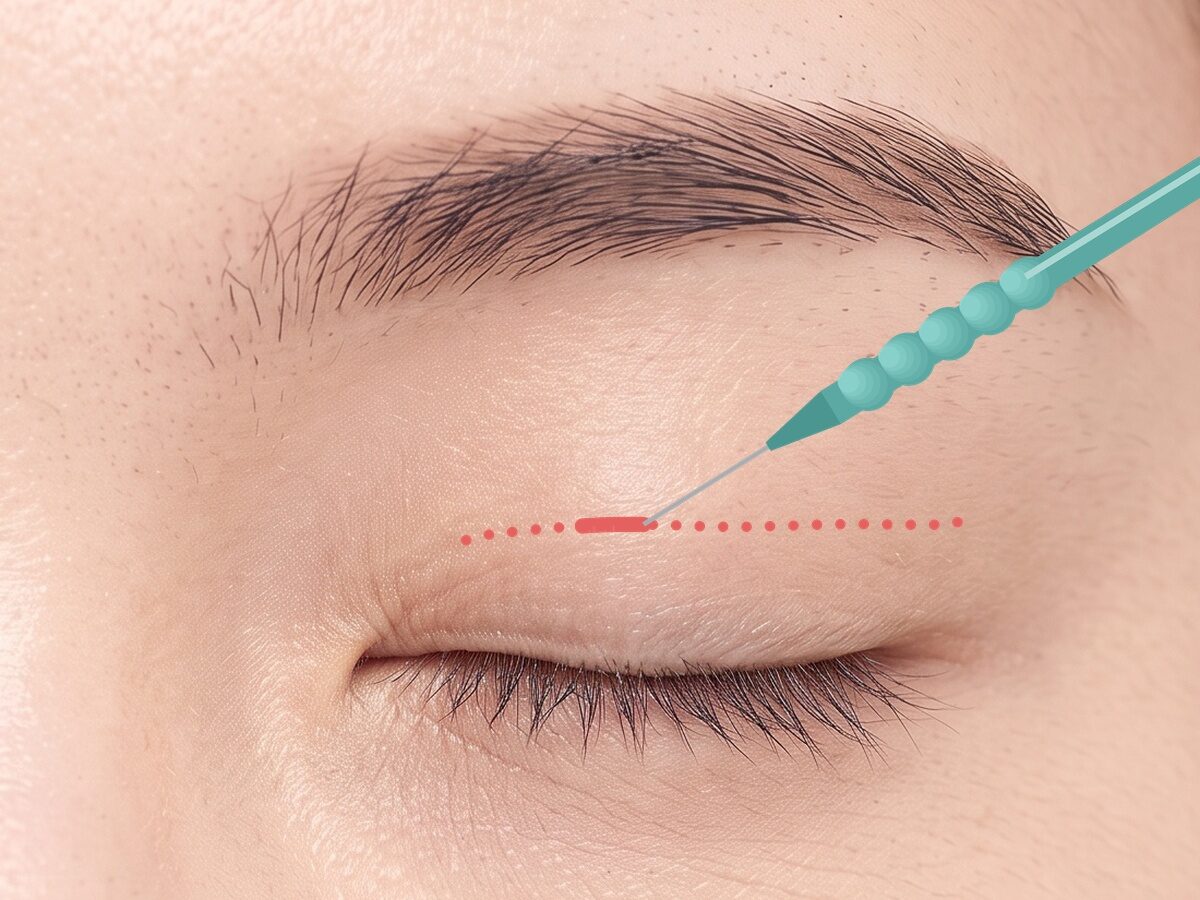
Faster recovery through precise, minimal dissection
The tissue is separated precisely along the muscle and fascial layers, with as little dissection as the plan allows. That anatomical approach limits unnecessary trauma, which in turn reduces swelling and discomfort and supports a quicker return to daily routine.
- SPECIAL 02

A natural fascial connection
The skin is joined flexibly to muscle and fascia, so the line responds to every movement of the eye and looks alive rather than drawn on.
- SPECIAL 03
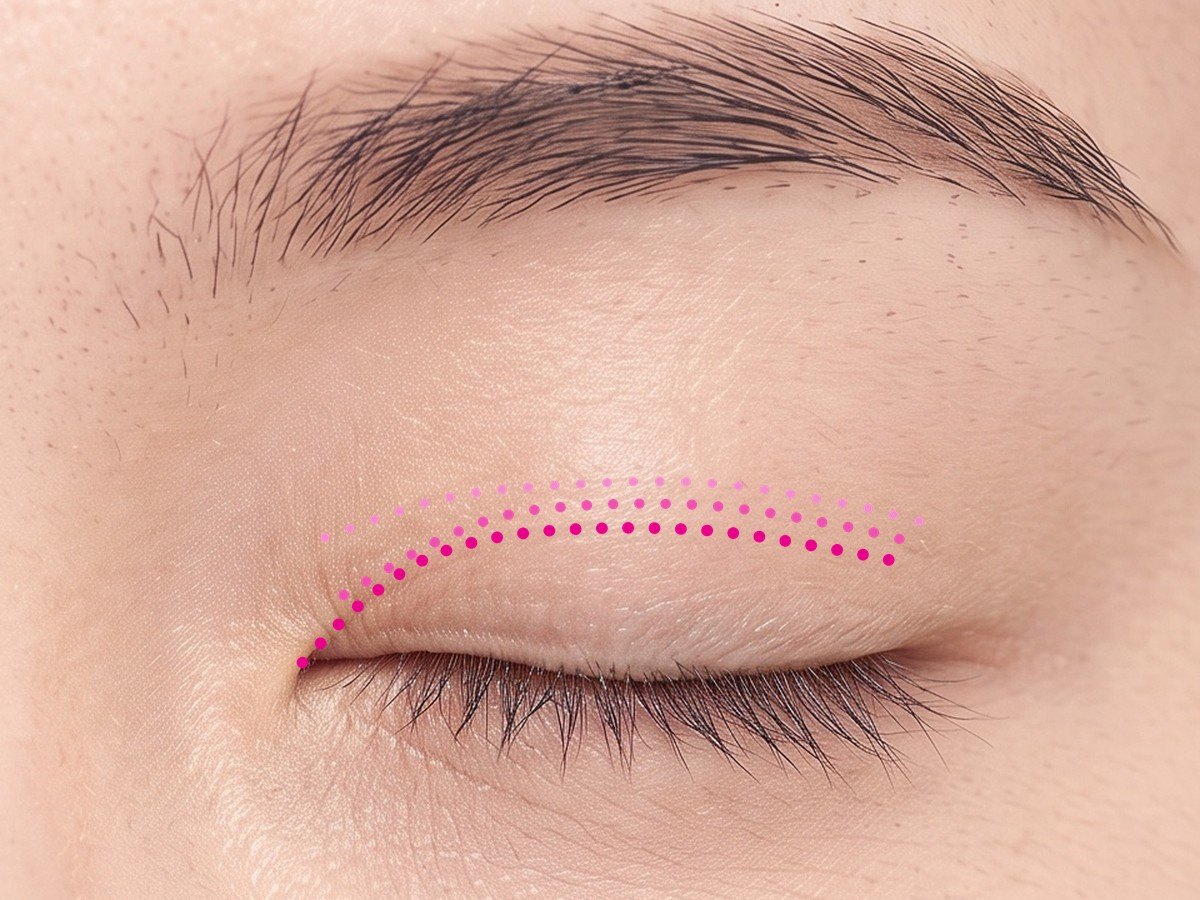
A line designed for your eyes
From a hint of an inner fold to a clearly defined crease, the height and shape are adjusted to the structure of the eye and the balance of the face.
- SPECIAL 04
Led by our physicians
Consultations and procedures are led by Dr. Jeong or Dr. Lee, supported by our medical team. Read more about our doctors.
Consultation, procedure and recovery: what to expect
Consultation begins with an examination of the lids: skin thickness, the amount of fat, the strength of the muscle that lifts the lid and any difference between the two sides. If that muscle is weak, ptosis correction may be discussed alongside, or instead of, a crease alone.
The crease height and line type are then designed with you in front of a mirror, in millimeters, and confirmed before anything is marked. During the procedure, tissue is separated precisely along the muscle and fascial layers, with as little dissection as the plan allows.
Because unnecessary trauma is kept to a minimum, swelling and discomfort are limited and most patients return to their usual routine soon afterward. The line continues to soften over the following weeks, and the final result varies from person to person.

Frequently asked questions
- Q1
Will the crease disappear when I close my eyes?
That is the intention of the technique. Because the skin is anchored to moving fascia rather than a fixed point, the lid is designed to close smoothly without a fold or dimple. How completely it smooths out depends on lid thickness and healing.
- Q2
How is the height of the crease decided?
Together, at consultation. Lines from 4–5 mm for a subtle inner fold to 8–9 mm for a clearly visible crease are possible, chosen according to the structure of the eye, brow position, skin thickness and the impression you would like.
- Q3
How long does recovery take?
Because the incisions are 3 mm or less, swelling and pain are reduced and, in our experience, recovery is about twice as fast as with conventional incision surgery. The line goes on settling for some weeks.
- Q4
I already have a double eyelid that looks unnatural. Can it be revised?
Patients unhappy with a stiff or obviously surgical line are among those the technique was designed for. Whether it suits your revision depends on the previous surgery and the state of the tissue, so a careful examination comes first.
- Q5
What if my eyelid also droops?
A crease alone does not lift a lid whose muscle is weak. If ptosis is present, your doctor will discuss ptosis correction as part of the plan; where loose skin rather than a weak muscle is the issue, an upper blepharoplasty may be the better choice.
Begin with
a conversation.
Consultations are led by Dr. Jeong or Dr. Lee, with our medical team supporting you throughout your visit. Appointments are recommended so that you can be seen without waiting, in English or Korean.
Results and recovery times vary from person to person, and every medical procedure carries potential side effects. The information on this page is provided for general guidance only and does not replace an in-person consultation. Please consult with our doctors for advice specific to your case.