
Eye Surgery
Under-Eye Fat Repositioning
이중눈밑지방재배치수술Under-eye bags and hollows are rarely a fat problem alone. The clinic's dual approach repositions orbital fat and restores the support of the midface, so the lower lid looks shorter, smoother and rested.

What dual under-eye fat repositioning is
Conventional fat repositioning moves the orbital fat that bulges beneath the eye into the hollow of the tear trough. It addresses the bag and the groove below it, and little else.
The dual approach goes a step further. In the same procedure the support structure of the midface, the suborbicularis oculi fat (SOOF) and the malar fat pad, is restored, so the lower lid is supported from below as well as smoothed from above.
The visible effect is a shorter lower lid, meaning less distance between the lashes and the start of the cheek, a softer transition from lid to cheek, and less of the shadow that reads as dark circles.
| Aspect | Conventional fat repositioning | Dual under-eye fat repositioning |
|---|---|---|
| Area treated | Orbital fat beneath the eye | Orbital fat plus the midface (SOOF and malar fat pad) |
| Main effect | Filling of the tear trough | Reduced lower lid height plus lifted midface volume |
| Additional benefit | Improvement of dark circles | A younger lower lid contour |

Who this procedure is for
- 01
A long, sagging lower lid
The area under the eye looks long and tired, and adds years to the face.
- 02
A flat midface
The midface is flat or the cheekbones are not prominent, so there is little support beneath the lid.
- 03
Previous fat repositioning fell short
You have had conventional fat repositioning and the result did not meet your expectations.
- 04
An uneven under-eye contour
The under-eye area is lumpy or uneven, so the eyes look untidy even when you are rested.
Key points of the dual approach
Is under-eye fat really the whole story when a face reads as older? Usually the change comes from the orbital fat and from the tissue around it, and the dual procedure addresses both.
- POINT 1
Stability over the medium and long term
Fixing the fat in two planes secures its position, which is designed to keep the result stable well beyond the early months.
- POINT 2
A shorter lower lid
Reducing the visible height of the lower lid is one of the changes that most reliably makes the eyes look younger.
- POINT 3
Dark circles and fine lines
Repositioned orbital fat fills the shadow of the tear trough. Reinforced midface volume supports the skin above it and softens fine lines.
- POINT 4
A natural, younger contour
The lid flows into the cheek in a single smooth line rather than a bulge followed by a hollow.
The procedure step by step
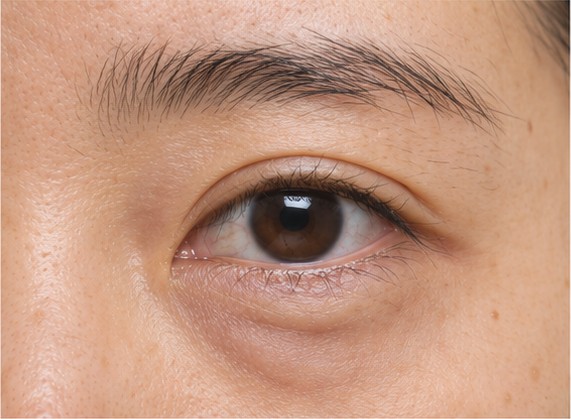
Before surgery
A thorough consultation: the lower lid and midface are examined and the surgical plan is agreed with the specialist.

Minimal incision
The incision is made inside the lower lid, through the conjunctiva, so there is no cut in the eyelid skin.

Fat removal and repositioning
Protruding orbital fat is reduced or moved into the hollow beneath it. Where volume is missing, the patient's own fat is placed in the sunken areas.
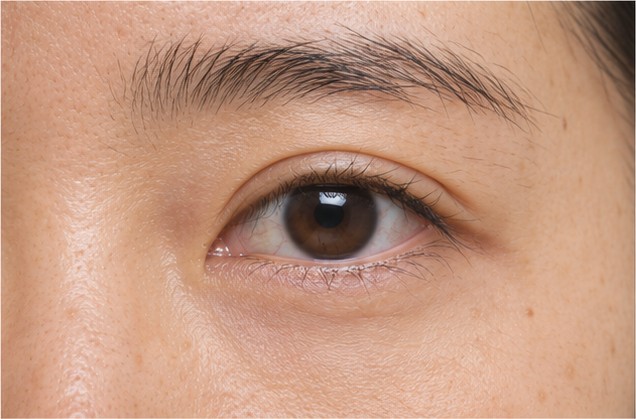
After surgery
A brighter, smoother under-eye area with a shorter lower lid.
Why repositioning matters more than removal
Under-eye fat is easy to remove and hard to replace. Taking it out indiscriminately can leave the surrounding area hollow, and a hollow lower lid tends to look older rather than younger as the years go on.
SNU Plastic Surgery Clinic therefore treats the existing fat as a resource. It is moved into the hollows where it is needed, which limits unnecessary fat loss, and soft tissue that has been lost around the eye is restored with fat grafting.
The aim is to improve the midface as a whole. The fat that once bulged now supports the lid, and the cheek beneath it regains the volume that holds the contour in place.
What makes the clinic's approach different
- SPECIAL 01

An accurate diagnosis
The anatomy of the under-eye area and the pattern of aging are analyzed in detail before any plan is made.
- SPECIAL 02
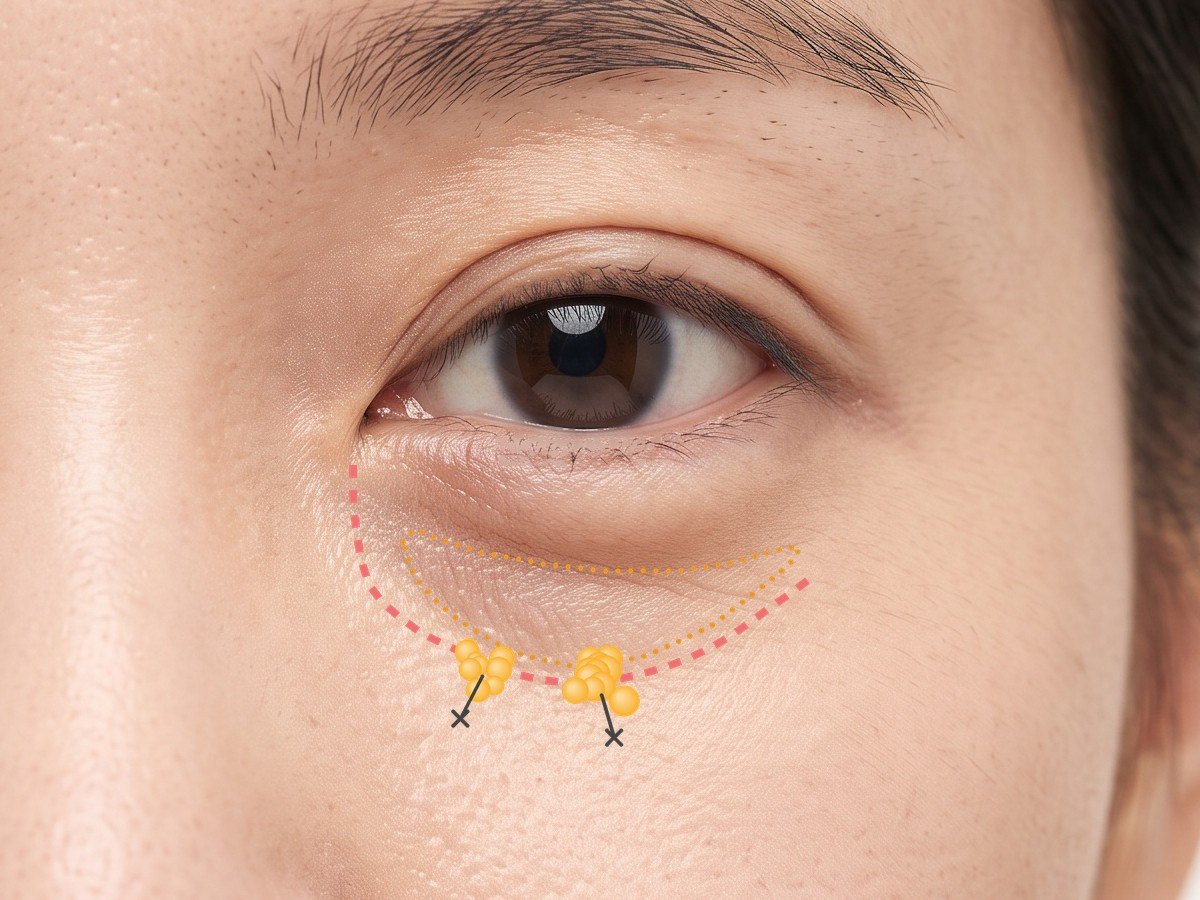
A precise technique
Structural balance is restored by repositioning the shape of the tissue, not by simple removal.
- SPECIAL 03
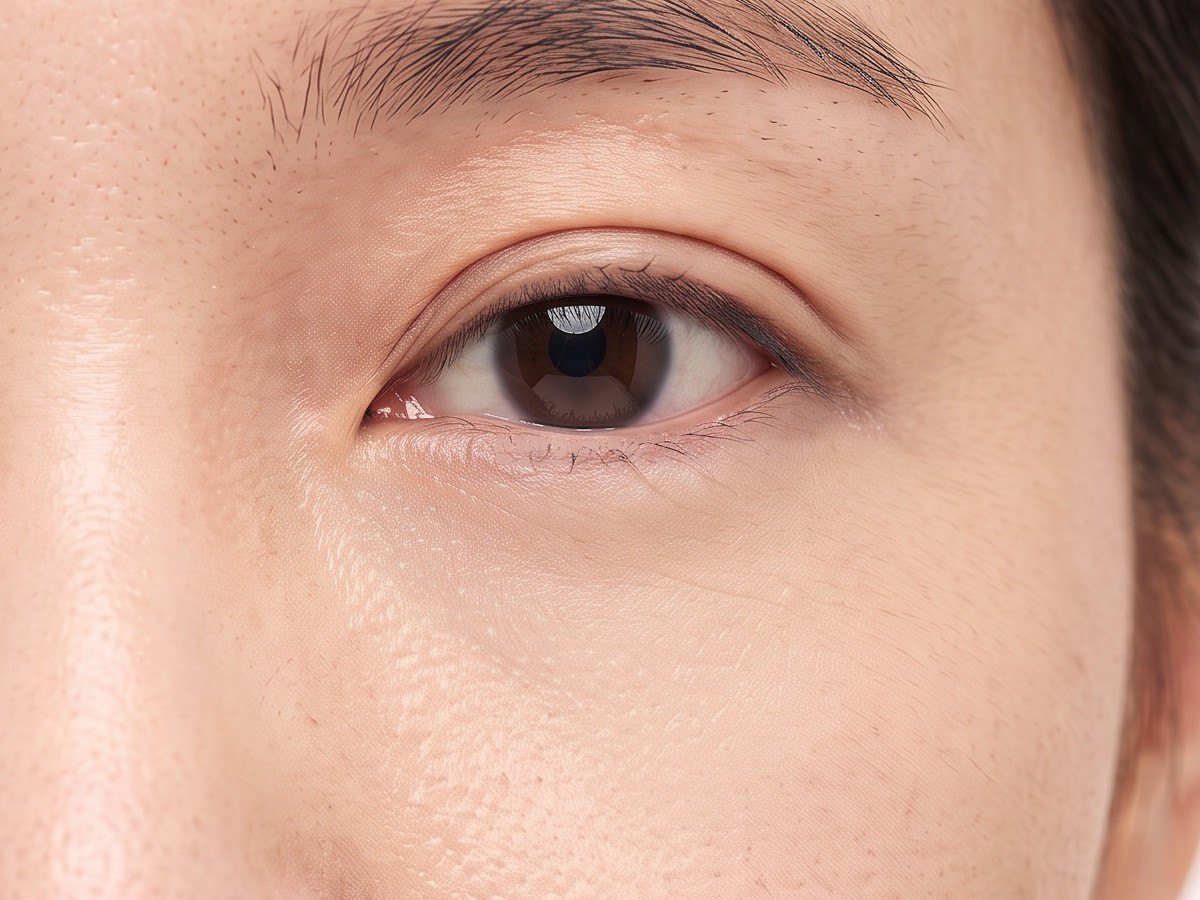
Minimal scarring
The incision is made through the conjunctiva inside the lid, which avoids a scar on the skin of the eyelid.
- SPECIAL 04

Results designed to last
The repositioning method is designed to improve the survival of the fat, so that the natural contour of the eye is maintained over time.
Consultation, procedure and recovery: what to expect
At consultation, your doctor examines the orbital fat, the depth of the tear trough, the tone of the skin and the volume of the midface.
That examination decides the plan. A bulge-and-hollow pattern with good skin tone suits repositioning through the inside of the lid; where loose skin is the main issue, a lower blepharoplasty may be more appropriate.
The procedure is performed through an incision inside the lower lid, so there is no external wound to care for. Swelling and some bruising settle over the following weeks, the contour refines as the tissue heals, and results vary from person to person.

Frequently asked questions
- Q1
How is this different from conventional fat repositioning?
Conventional repositioning moves orbital fat into the tear trough and stops there. The dual approach also restores the support of the midface, the SOOF and malar fat pad, so the lower lid is shortened and the cheek lifted in the same procedure.
- Q2
Will there be a visible scar?
The incision is made inside the lower lid, through the conjunctiva, so there is no cut in the eyelid skin. Where fat grafting is included, the fat is harvested elsewhere on the body through a very small access point.
- Q3
Will the repositioned fat stay in place?
The technique fixes the fat in two planes and is designed to improve its survival, which is what gives the result its stability. As with any living tissue, the degree of retention varies between individuals.
- Q4
Will it help my dark circles?
When the darkness is a shadow cast by a bulge above a hollow, repositioning the fat removes the cause. Darkness from pigment in the skin is a separate issue, addressed with pigmentation treatments.
- Q5
What if I also have loose skin under the eyes?
Repositioning through the inside of the lid does not remove skin. If the skin has lost its elasticity, a classic lower blepharoplasty, which addresses fat and skin together, may be recommended instead.
Begin with
a conversation.
Consultations are led by Dr. Jeong or Dr. Lee, with our medical team supporting you throughout your visit. Appointments are recommended so that you can be seen without waiting, in English or Korean.
Results and recovery times vary from person to person, and every medical procedure carries potential side effects. The information on this page is provided for general guidance only and does not replace an in-person consultation. Please consult with our doctors for advice specific to your case.