Aesthetic Treatments
Skin Tightening & Lifting
리프팅Non-surgical lifting is not a single treatment. Ultherapy PRIME, Sofwave, ONDA and Thermage FLX place energy at different levels of the face — from the skin itself to deeper supporting tissue and, when appropriate, localized fat. The right treatment depends not only on what has changed, but also on what should be preserved.
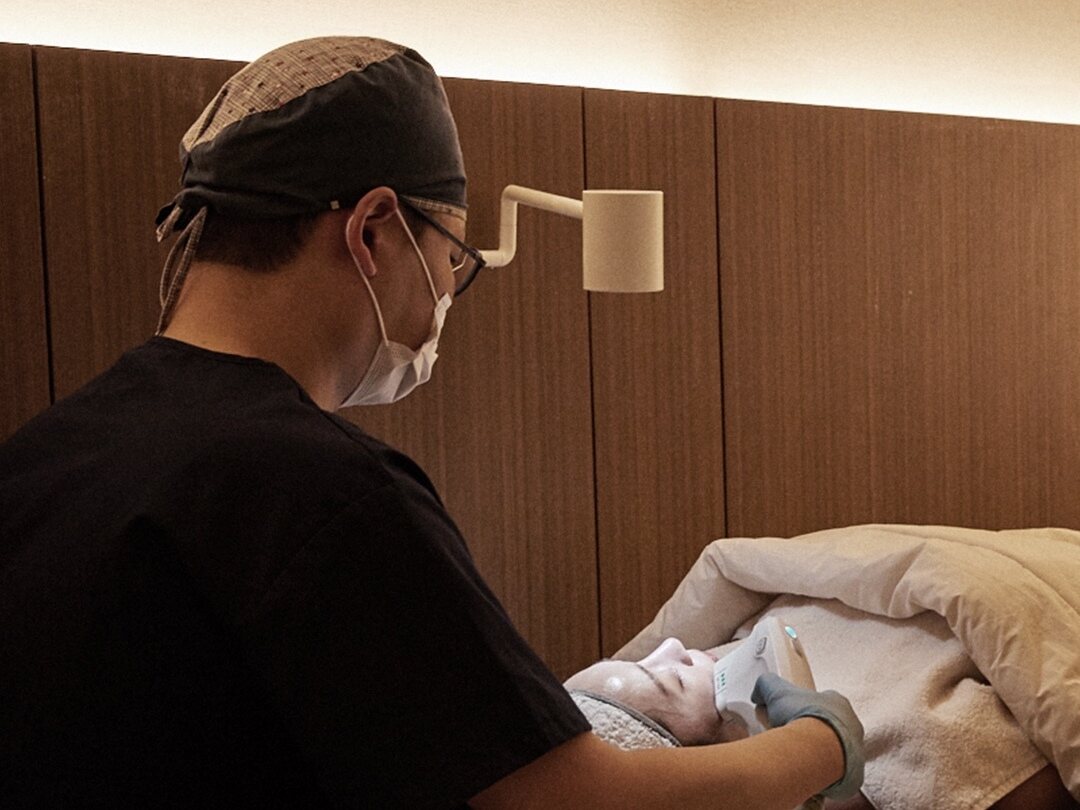
The key to lifting is the physician, not the device
Energy-based treatments work by placing controlled heat into a chosen layer of tissue and allowing the body to respond through contraction and collagen remodeling.
But the device alone does not determine the result.
The important questions are where the energy is placed, how deeply it should reach, how much is appropriate and, just as importantly, which areas should be left alone.
At SNU Plastic Surgery Clinic, treatment is planned and performed by Dr. Jeong. A plastic surgeon's understanding of the skin, fat compartments, fascia, muscles and facial proportions guides the treatment.
The aim is not simply to make the face tighter or smaller. It is to improve support while preserving the volume and character that still make the face look youthful.
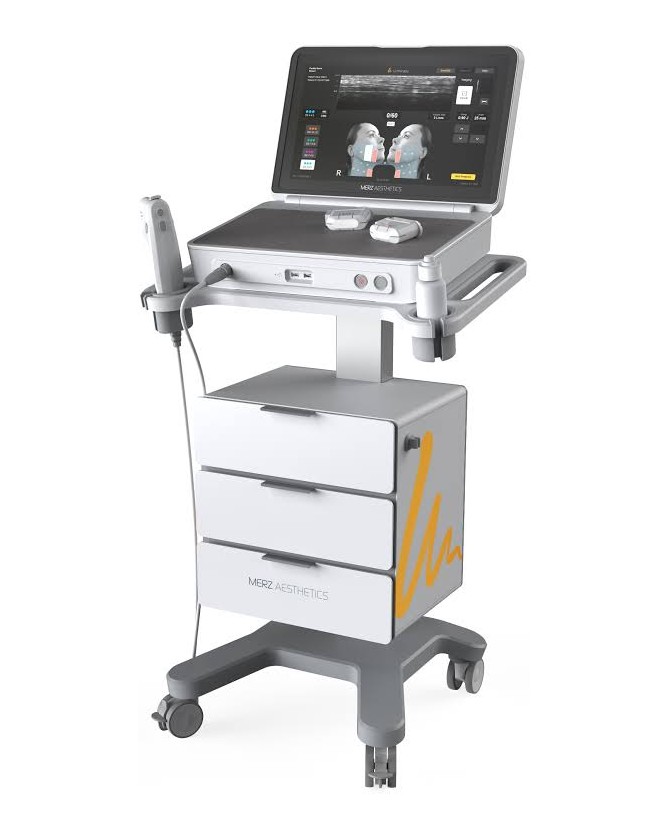
Ultherapy PRIME
Micro-focused ultrasound with real-time imaging, capable of treating from the dermis to the deeper SMAS layer.
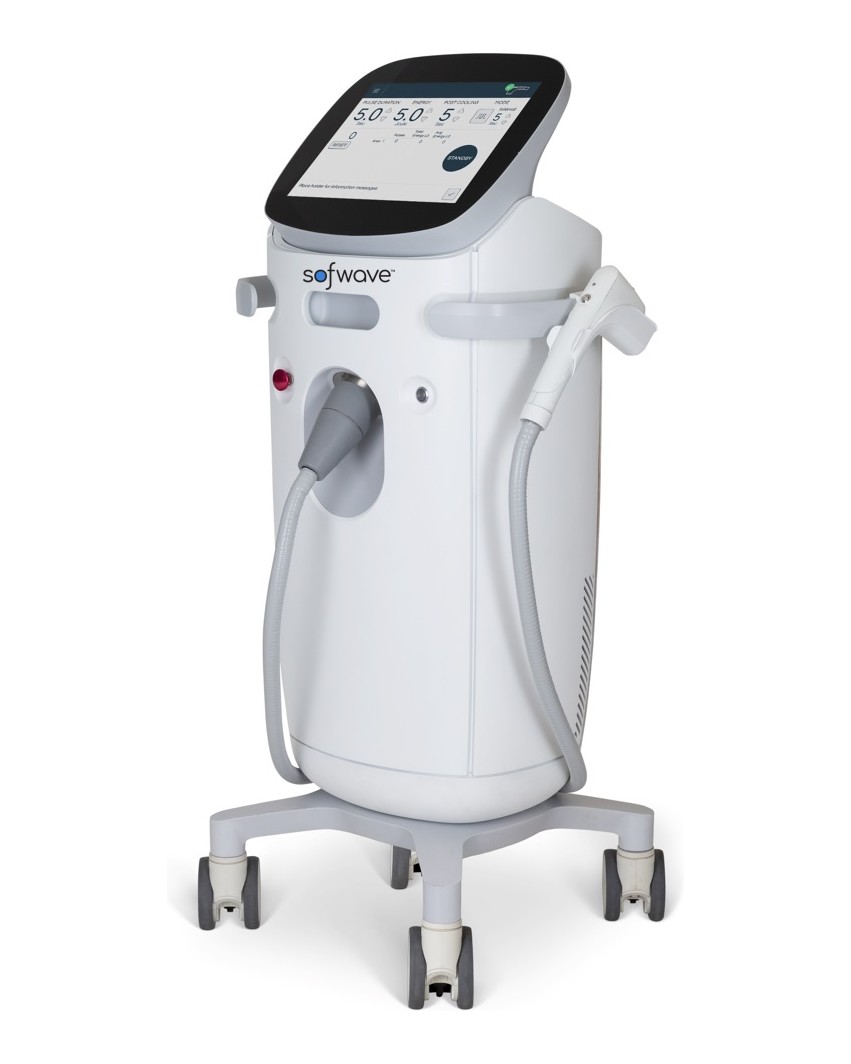
Sofwave
Parallel-beam ultrasound concentrated in the mid-dermis to improve skin elasticity and collagen remodeling while avoiding unnecessary treatment of deeper facial structures.
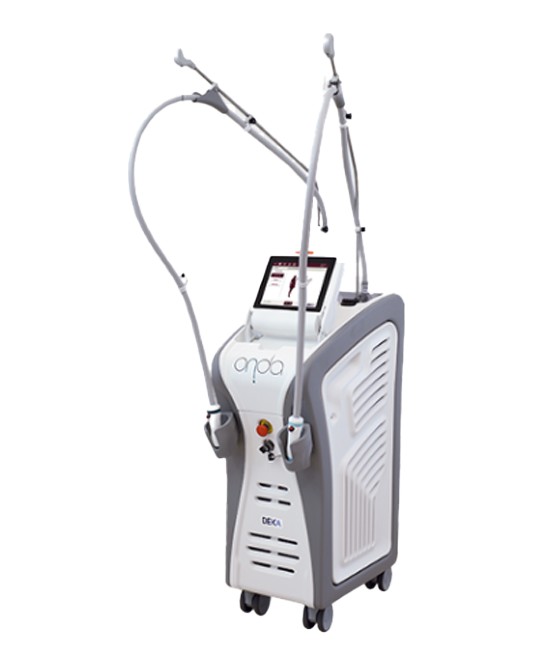
ONDA
Microwave energy used when skin laxity is accompanied by localized fat, particularly beneath the chin and in selected body areas.
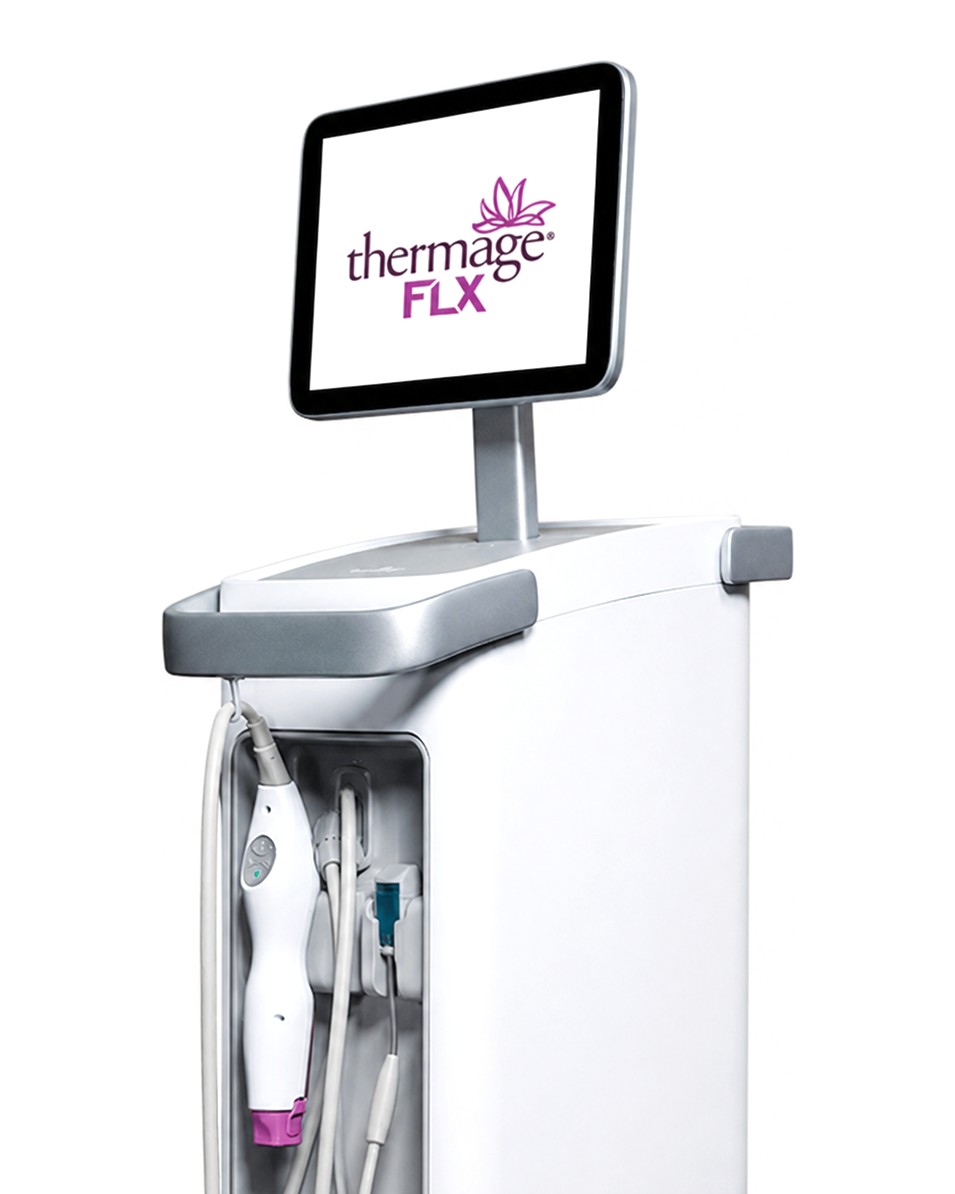
Thermage FLX
Monopolar radiofrequency that broadly heats the skin to improve firmness, fine lines and surface tightness.
Lift what has descended. Preserve what is still youthful.
Non-surgical lifting works through more than one mechanism.
Some treatments tighten deeper supporting tissue. Some improve the elasticity and recoil of the skin. Others can reduce localized fat when excess volume itself is contributing to a heavy contour.
These effects should not be used interchangeably.
In patients in their 20s and 30s, age-related movement of the facial fat compartments is usually still limited. When facial volume is already well balanced, aggressively reducing that volume may offer little advantage.
For these patients, our approach often places greater emphasis on maintaining the quality and elasticity of the skin with treatments such as Sofwave or Thermage FLX. Ultherapy may also be used conservatively when deeper support needs attention, without making facial volume reduction the objective.
The same principle applies to naturally slim faces at any age. When maintaining facial volume is important, treatment should focus more on skin elasticity and structural support than on making the face smaller.
As aging progresses, the balance can change. Deeper tissue laxity, descent of facial compartments and localized fullness beneath the jaw may become more important. Ultherapy or ONDA may then have a larger role.
And when deeper tissue has been tightened but aging skin no longer recoils sufficiently, Sofwave or Thermage can be added to improve the skin that lies over it.
The goal is balance: tightening where support has been lost, reducing volume only where there is genuinely too much, and preserving volume where it still contributes to a natural, youthful face.
Ultherapy PRIME: deeper ultrasound with real-time imaging
Ultherapy PRIME uses micro-focused ultrasound to create small points of controlled heat beneath the surface of the skin.
Its distinguishing feature is real-time ultrasound imaging. The physician can see the tissue layers before delivering energy and choose the appropriate treatment depth for each area.
Different transducers allow treatment of the superficial and deeper dermis as well as the SMAS and platysma — the deeper fibromuscular layer involved in surgical lifting.
The treatment is therefore particularly useful when facial laxity is not only a problem of the skin, but also of the deeper support beneath it.
The lifting effect develops gradually as collagen remodels over the following months.
In the United States, Ultherapy is FDA-cleared for indications including lifting of the eyebrow and lax submental and neck tissue.
Who is Ultherapy PRIME for
- 01
Deeper facial laxity
Those whose jawline, cheek or neck has begun to lose structural support rather than simply skin texture.
- 02
Lifting without an incision
Those who want a non-surgical option and do not yet require the degree of repositioning achieved with a facelift.
- 03
Precise, anatomy-based treatment
Those who benefit from different depths being selected for different parts of the face.
- 04
Combination treatment
Those whose deeper tissue requires lifting but whose skin may also benefit from Sofwave or Thermage for additional elasticity.
Sofwave: ultrasound for the skin itself
Sofwave uses high-intensity parallel ultrasound beams to deliver controlled heat primarily into the mid-dermis.
Unlike ultrasound designed to reach the deeper fascial layer, Sofwave concentrates its thermal effect around the dermis, approximately 1.5 mm beneath the skin surface.
This stimulates remodeling of collagen and elastin while an integrated cooling system protects the surface of the skin.
For this reason, Sofwave occupies a different place in our treatment strategy.
Its main purpose is not to remove facial volume or to reach the SMAS. It is to improve the ability of the skin itself to remain firm, resilient and better supported.
This makes it particularly useful when facial volume is already appropriate and preserving that volume is part of the treatment goal.
Clinical studies of high-intensity parallel-beam ultrasound have demonstrated improvement in facial laxity, fine lines and wrinkles, together with evidence of collagen and elastic-fiber remodeling.
In the United States, Sofwave is FDA-cleared for improvement of facial lines and wrinkles and for lifting of the eyebrow, submental tissue and neck.
Why Sofwave
Skin tightening without deliberately targeting facial fat. Because its energy is concentrated within the dermis rather than the deeper facial fat compartments, Sofwave is well suited to patients for whom preserving facial fullness is important.
A treatment for elasticity, not simply contour. It is useful when the main problem is reduced skin recoil, early laxity or fine wrinkling rather than excessive facial volume.
A useful partner to deeper lifting. Ultherapy or contouring treatment may improve deeper support, but older or photodamaged skin may not contract sufficiently on its own. Sofwave can be added to address the skin above those deeper layers.
Suitable for maintenance. For patients who want gradual, natural-looking maintenance rather than a dramatic change in facial shape, periodic treatment focused on skin quality can be a reasonable strategy.
Minimal interruption to daily life. The treatment is non-invasive, and most patients can return to normal activities soon afterward.
Who is Sofwave for
- 01
Younger patients who want to preserve facial volume
Patients in their 20s and 30s with appropriate facial fullness who are more interested in maintaining firmness than reducing volume.
- 02
Naturally slim faces
Those in whom excessive fat reduction could make the face appear hollow or older.
- 03
Early skin laxity
Those beginning to notice fine wrinkling, reduced elasticity or subtle loss of firmness without significant tissue descent.
- 04
Skin that needs to follow a deeper lift
Older patients whose deeper support has been treated with Ultherapy or another modality but whose skin itself also requires tightening.
- 05
Long-term maintenance
Those who prefer gradual preservation of skin quality rather than waiting until more advanced laxity requires a larger correction.
ONDA: microwave energy when fat is part of the problem
ONDA is a non-invasive device developed by DEKA in Italy using 2.45 GHz microwave energy.
Its Coolwaves technology can heat subcutaneous tissue and collagen while contact cooling protects the skin surface.
ONDA is particularly useful when laxity is accompanied by localized fat.
On the face, this most commonly means fullness beneath the chin or selected lower-face areas where excess volume contributes to a less defined contour.
The same technology can also be used on localized body areas such as the abdomen and upper arms.
Because ONDA can affect adipose tissue, we use it more selectively in patients with naturally lean faces or where facial volume preservation is a priority.
Who is ONDA for
- 01
Double chin and localized fullness
Those whose jawline is obscured partly by excess submental fat rather than lax skin alone.
- 02
Fat and laxity together
Those who need both contour reduction and tightening in the same area.
- 03
Selected body contouring
Those with localized fat or laxity of areas such as the abdomen or upper arms.
- 04
Not every slim face
Patients who already have limited facial volume may benefit more from skin-focused treatments such as Sofwave or Thermage rather than additional volume reduction.
Thermage FLX: radiofrequency for broad skin tightening
Thermage FLX uses monopolar radiofrequency energy to heat the skin while cooling protects its surface.
Controlled heating causes existing collagen to contract and stimulates further collagen remodeling over time.
Its strength is broad treatment of the skin itself: firmness, fine lines and surface tightness rather than mechanical repositioning of deeper facial structures.
Thermage can also treat delicate areas around the eyes with a dedicated treatment tip.
For patients whose facial volume is already appropriate, Thermage is another way of improving skin firmness without making reduction of facial fat the treatment objective.
Who is Thermage FLX for
- 01
General loss of skin firmness
Those noticing looser skin or fine wrinkles across the face rather than one isolated area of descent.
- 02
The eye area
Those with early laxity and wrinkling around the eyelids who are not yet ready for surgical correction.
- 03
Volume-preserving rejuvenation
Those who want to improve skin firmness while maintaining the natural fullness of the face.
- 04
Maintenance over time
Those who prefer periodic non-invasive treatment to preserve skin quality as aging progresses.
Sofwave and Thermage: two ways of treating elasticity
Sofwave and Thermage are often placed in the same broad category because both are used primarily to improve the skin rather than to reposition deep facial tissue.
They do this differently.
Sofwave uses ultrasound concentrated in the mid-dermis.
Thermage uses monopolar radiofrequency to create broader controlled heating through the skin.
Neither is automatically better.
The choice depends on skin thickness, the treatment area, previous procedures, facial volume, degree of laxity and how the treatment fits with the rest of the lifting plan.
In some patients one is enough. In others they may be used at different times as part of a longer-term strategy for maintaining skin elasticity.
Four technologies, four different roles
- 01
Ultherapy PRIME
Best thought of as a deeper structural treatment. It can reach the fibromuscular supporting layer and is useful when laxity involves more than the skin alone.
- 02
Sofwave
A skin-focused ultrasound treatment. It is particularly attractive when improving elasticity while preserving facial volume is a priority.
- 03
ONDA
A contouring treatment when localized fat contributes to heaviness, especially beneath the chin, with additional effects on tissue firmness.
- 04
Thermage FLX
A broad radiofrequency skin-tightening treatment, useful for overall firmness, fine lines and delicate areas such as the eyelids.
The treatments can overlap, but they are not interchangeable.
What changes with age
In a younger face, the first goal is often preservation.
When the fat compartments remain in a youthful position and facial volume is appropriate, maintaining good skin elasticity can offer more benefit than repeatedly trying to make the face smaller.
This is why many patients in their 20s and 30s are better served by a conservative, skin-focused approach.
With increasing age, the problem gradually becomes more complex. Skin becomes less elastic, deeper support loosens, fat compartments change position and localized fullness may accumulate along the lower face and beneath the chin.
At that point, a successful non-surgical lifting plan often requires more than one layer to be treated.
The treatment should evolve with the face rather than applying the same device every year.
What to expect: consultation, treatment and aftercare
- STEP 01
Consultation
Dr. Jeong evaluates skin elasticity, facial volume, fat distribution and deeper structural laxity. The first decision is not which machine to use. It is which tissue actually needs treatment.
- STEP 02
Planning
The face is divided into areas that need deeper support, areas that need better skin recoil, areas where excess volume may be reduced and areas where volume should be preserved.
- STEP 03
Treatment
Ultherapy PRIME, Sofwave, ONDA and Thermage FLX are all non-surgical treatments, but the sensation and treatment time differ between devices. The treatment is adjusted according to the area and the patient's anatomy.
- STEP 04
Results
Some tightening may be noticeable early, but energy-based lifting should be understood as a gradual process. Collagen remodeling continues over the following weeks and months, and results vary between individuals.
- STEP 05
Long-term strategy
A youthful face does not necessarily need stronger treatment every year. Sometimes the most appropriate long-term strategy is to preserve skin elasticity. At other stages, deeper lifting or selective contour reduction becomes more useful. The plan changes as the face changes.
Frequently asked questions
- Q1
Which device is right for me?
It depends on what has changed. Ultherapy PRIME is useful when deeper structural support needs treatment. Sofwave and Thermage focus more on skin firmness and elasticity. ONDA is useful when localized fat is contributing to the contour. Many patients need only one treatment. Others benefit from treating more than one layer.
- Q2
I am in my 20s or 30s. Do I need lifting treatment?
Not necessarily. If facial volume is well balanced and there is little age-related descent, our priority is usually preservation rather than aggressive lifting. For patients who want to maintain a natural appearance over time, treatments that support skin elasticity, such as Sofwave or Thermage, may be more appropriate than repeatedly reducing facial volume.
- Q3
I have a slim face. Can lifting devices make it look thinner?
Some energy treatments can affect deeper tissue or localized fat depending on the technology, treatment area and settings. For a slim face, this is an important part of treatment planning. We generally avoid unnecessary fat-targeting treatment when facial volume is already limited and instead place greater emphasis on skin elasticity and structural support.
- Q4
Can Sofwave or Thermage be combined with Ultherapy?
Yes. Ultherapy can address deeper supporting tissue, while Sofwave or Thermage can be used when the overlying skin also needs improved elasticity. This combination can be particularly useful as skin recoil decreases with age.
- Q5
When is ONDA a better choice?
ONDA becomes more useful when localized fat itself is part of the problem, such as a double chin or selected areas of lower-face fullness. It is not our default choice simply because a patient wants a smaller face.
- Q6
How is this different from a thread lift or a facelift?
Energy devices tighten tissue through controlled heating and collagen remodeling. A thread lift adds mechanical support. A facelift surgically repositions tissue. They solve different degrees and types of aging, and the best option depends on how much true tissue displacement has occurred.
- Q7
Is there downtime?
All four treatments are non-surgical and generally involve limited interruption to daily life. Temporary redness, swelling, tenderness or sensitivity can occur depending on the device and treatment intensity. More specific aftercare is discussed before treatment.
- Q8
How often should treatment be repeated?
There is no single schedule that suits every face. Age, skin quality, facial volume, previous treatment and the degree of structural change all matter. For younger patients, the emphasis may be on periodic maintenance of elasticity. With increasing laxity, treatment may become more focused on deeper support or combined approaches. The aim is not to repeat a device simply because a year has passed, but to treat what has actually changed.
Begin with
a conversation.
Consultations are led by Dr. Jeong or Dr. Lee, with our medical team supporting you throughout your visit. Appointments are recommended so that you can be seen without waiting, in English or Korean.
Results and recovery times vary from person to person, and every medical procedure carries potential side effects. The information on this page is provided for general guidance only and does not replace an in-person consultation. Please consult with our doctors for advice specific to your case.