Facial Rejuvenation
Endoscopic Brow Lift
내시경이마거상술A minimally invasive lift for the upper face. Heavy brows, hooded eyes and forehead lines are corrected at their source, through small incisions concealed inside the hairline.

The endoscopic brow lift
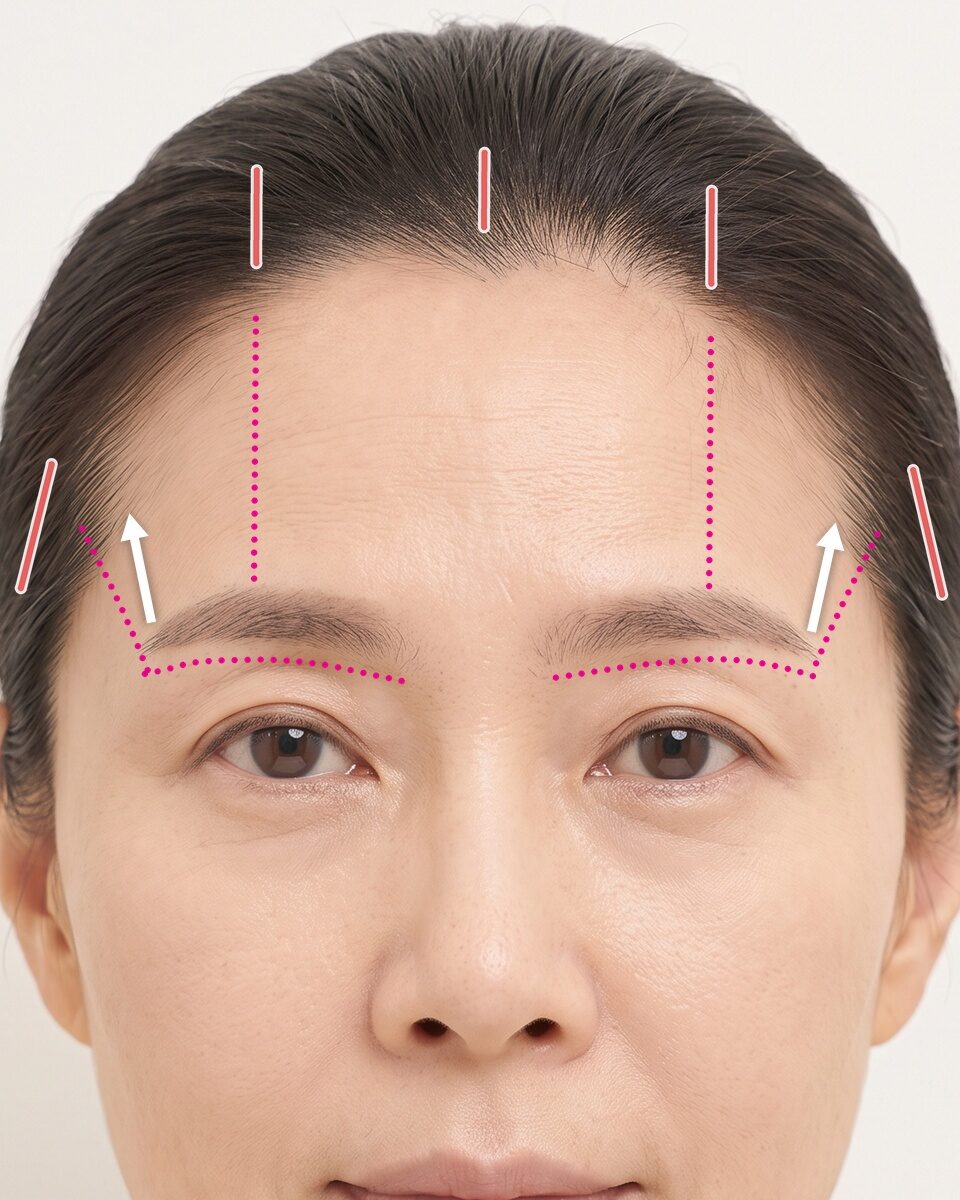
With age, the brow gradually settles lower on the forehead. The skin of the upper eyelid folds beneath it, the eyes look heavier and more tired, and the forehead muscles work harder to hold the brow up, etching horizontal lines.
These changes are more than cosmetic: a low, heavy brow can narrow the upper field of vision and leave the eyes feeling strained.
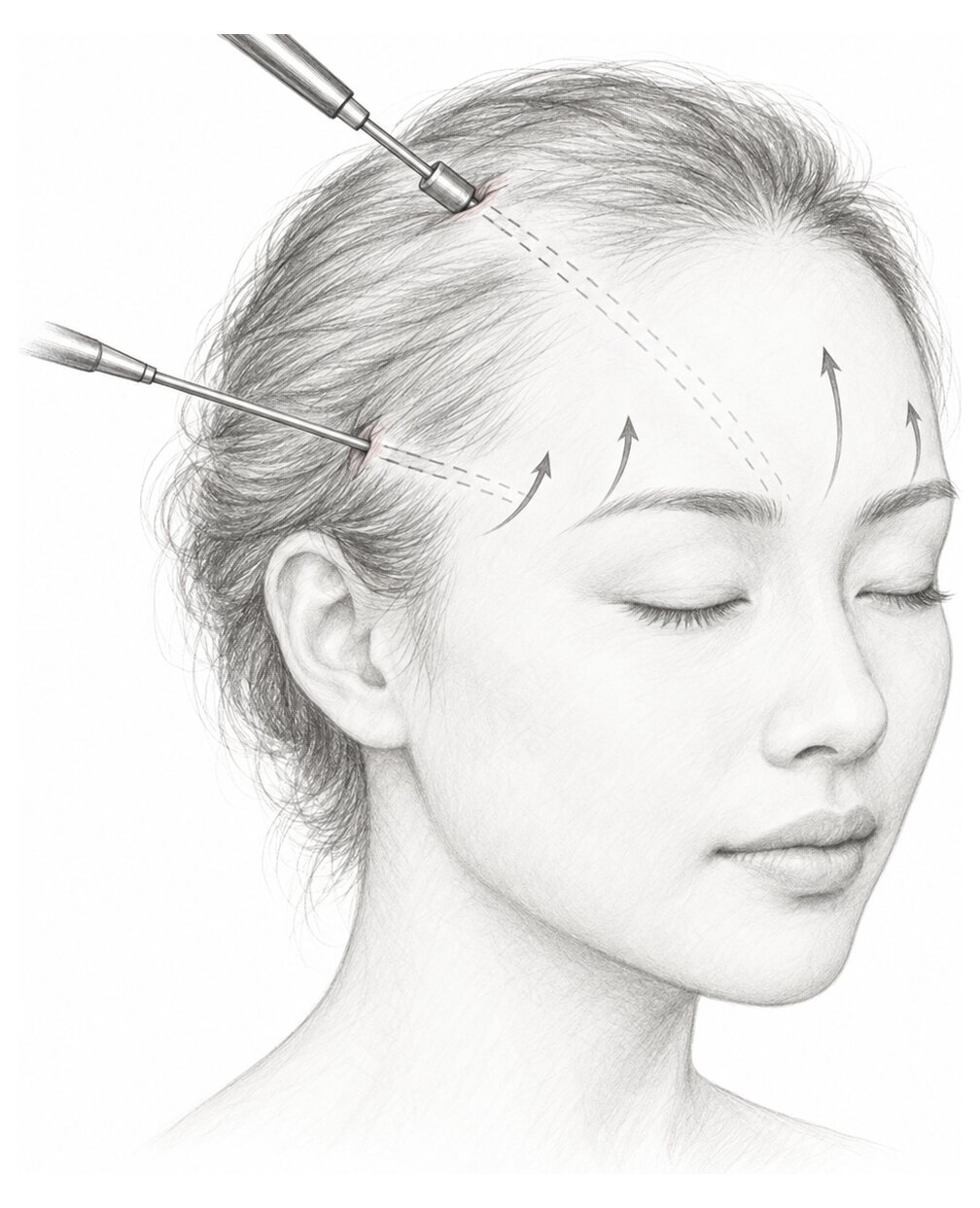
The endoscopic brow lift at SNU Plastic Surgery Clinic repositions the brow and the tissues of the upper face from within, through small incisions hidden in the hairline. A slim camera guides the release, so the lift follows the structure of the individual forehead rather than pulling on the skin.
The aim is simple to state and demanding to deliver: restore structure while preserving natural expression.
Who this procedure is for
- 01
Heavy, tired-looking eyes
The brows have settled low, the upper lids look heavy, and the face reads as tired even after a good night's sleep.
- 02
Eyelid surgery that did not open the eyes
A crease was created, but the brow sits too low for the eyes to look open. The cause is above the lid, not in it.
- 03
Deep forehead and frown lines
Horizontal lines across the forehead and vertical lines between the brows have deepened, lending the face a stern or gloomy expression.
- 04
A natural, functional improvement
You want the eyes to look clearer and feel less strained, without a surprised or pulled appearance.
What the lift achieves
Forehead and frown lines soften. Once the brow no longer has to be held up by the forehead muscles, the lines those muscles create tend to relax.
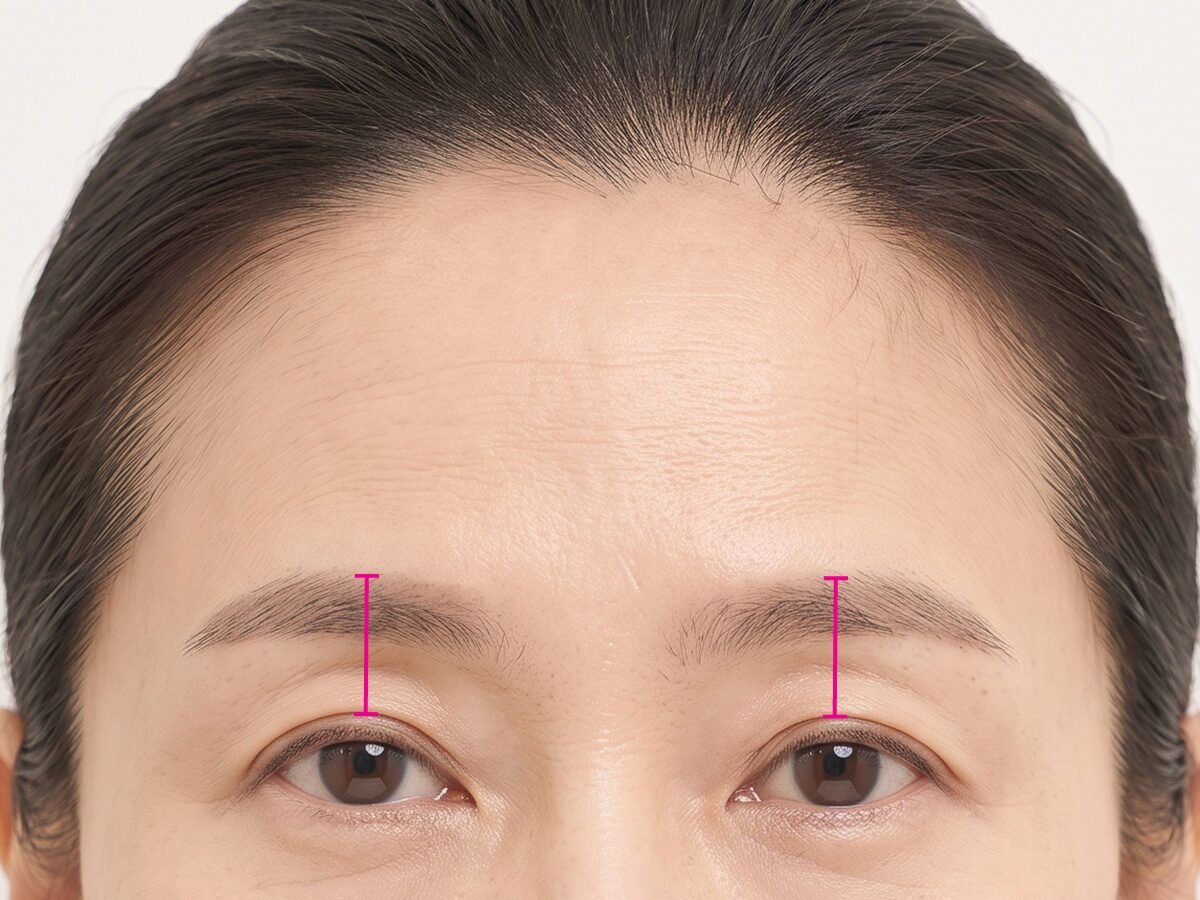
The distance between brow and lashes is restored. Re-establishing the space between the eyelid and the brow gives the eyes a clearer, more rested look.
Hooding over the eyelid crease is reduced. Skin that folded down over the double eyelid line is lifted away, so the crease shows again.
The brow returns to its natural position. Correcting brow height and shape restores the definition the upper face had before it descended.
The whole face comes back into balance. Because the upper third sets the tone for the rest of the face, lifting it often improves overall proportion.
How the upper face ages
Planning starts from tissue structure, because the brow does not descend on its own.
Facial aging is not one process but several, taking place in different layers at once. The skin thins and loses elasticity. The fat compartments beneath it deflate and drift downward.
Deeper still, the fascial layer that supports the soft tissue, the SMAS and its continuation into the temple and forehead, loosens, and the retaining ligaments that tether it to bone stretch. The bony frame itself changes slowly with age, giving the tissues less to rest on.
In the upper face this shows as a brow that sits lower, hooding of the upper lids, and forehead lines etched by the constant effort of lifting the brow. Treating the skin alone cannot correct a problem that begins in the support layers.
This is why Your doctor plans every lift from tissue structure. Knowing which layer has moved, and by how much, decides where the lift is anchored and how much lift is enough.

What makes our endoscopic brow lift different
- SPECIAL 01
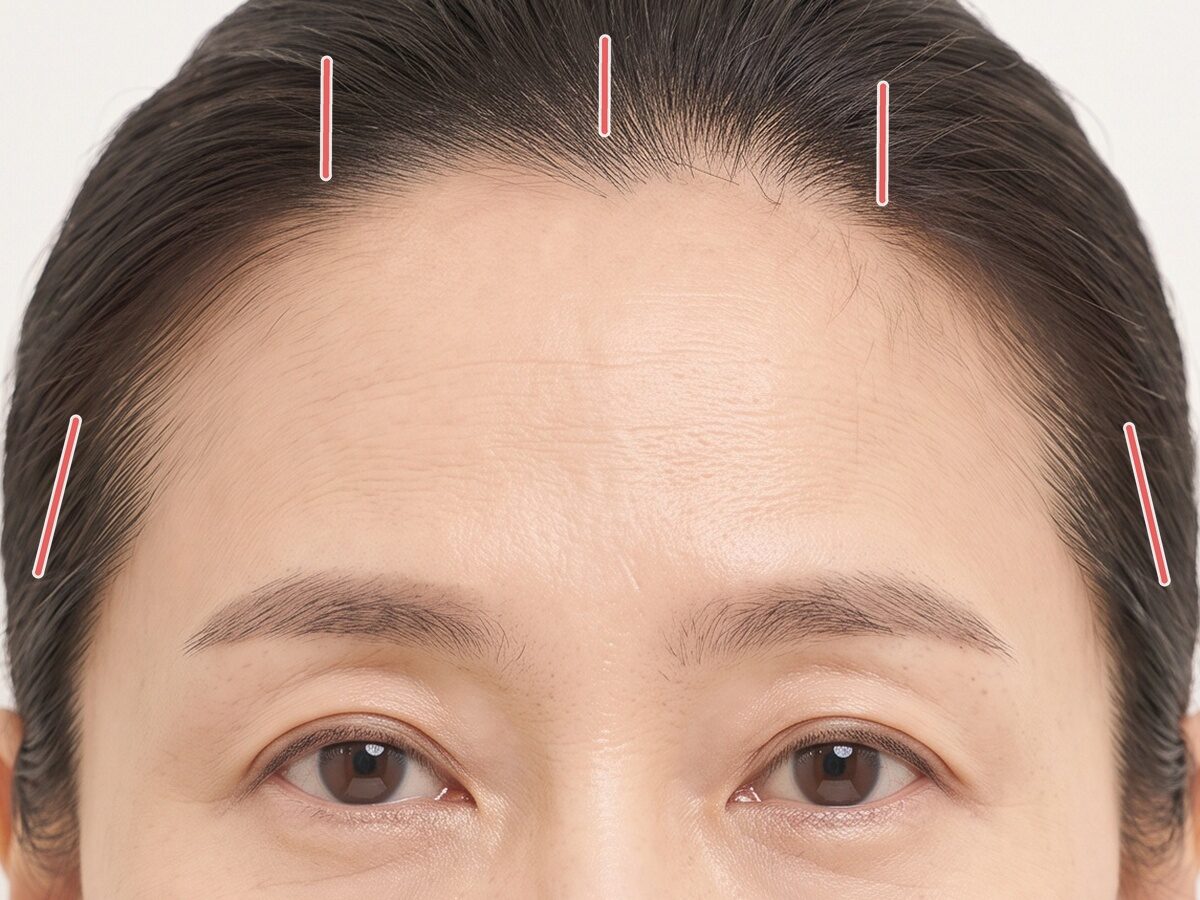
Small incisions, hidden in the hair
The procedure is carried out through incisions of about 2 to 3 cm placed inside the hairline. The scars are covered by hair, and recovery is generally quicker than after an open forehead lift.
- SPECIAL 02
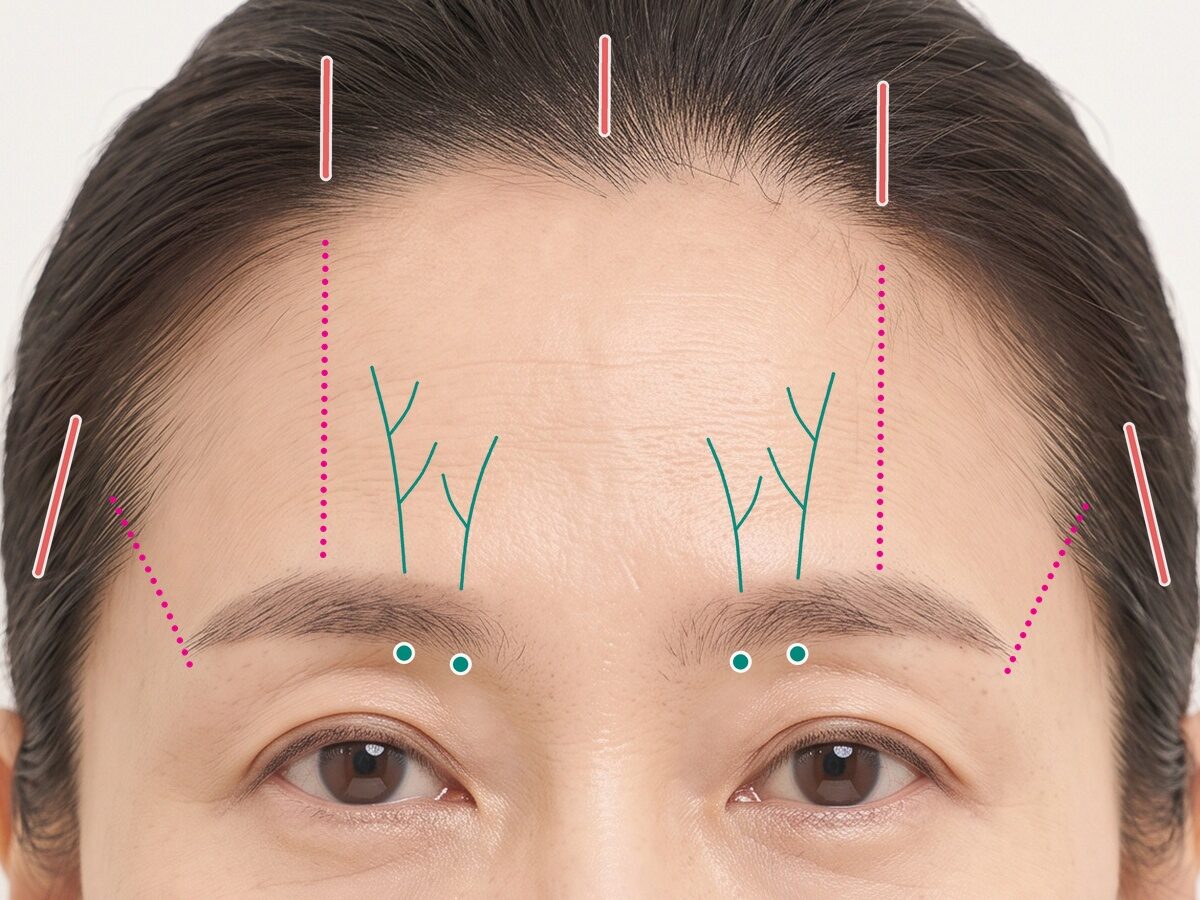
Full HD endoscopic dissection
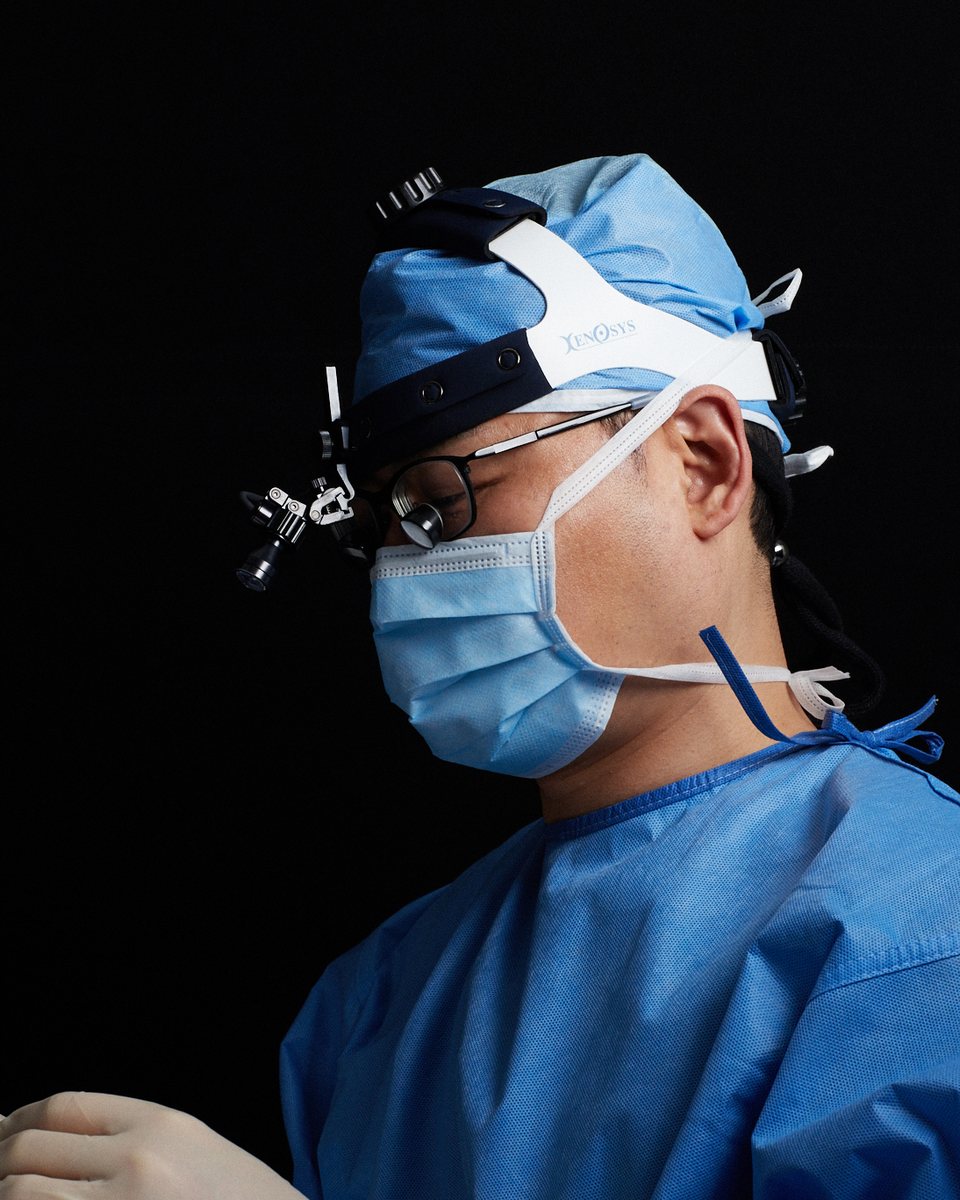
A high-definition endoscope brings nerves, blood vessels and muscles into clear view as the tissues are released. The dissection can be carried out precisely, with due care for the structures that must be protected.
- SPECIAL 03

Lifting the support layer, not only the skin
The skin and the deeper fascial (SMAS) layer are lifted together, so the cause of the descent is addressed rather than its surface signs. The direction and extent of the lift are tailored to each brow, and the result is designed to hold.
- SPECIAL 04
Led by our physicians
Consultations and procedures are led by Dr. Jeong or Dr. Lee, supported by our medical team. Read more about our doctors.
Consultation, surgery and recovery: what to expect
- STEP 01
Consultation
Your doctor examines the position of the brow, the upper eyelids, the forehead muscles and the skin. What looks like excess eyelid skin is sometimes a low brow, and sometimes both, so the assessment decides whether a brow lift, upper blepharoplasty, ptosis correction or a combination is appropriate.
- STEP 02
Planning
The direction and amount of lift and the placement of the incisions are decided for your forehead and hairline, and discussed openly, including what the procedure will not change.
- STEP 03
Surgery
Through small incisions inside the hairline, the tissues of the forehead are released under endoscopic view, repositioned and secured. The incisions are closed so that the scars sit within the hair.
- STEP 04
Early recovery
Swelling and some bruising around the forehead and eyes are expected in the first days and settle over the following weeks. Numbness or tightness of the scalp is common at first and usually improves with time.
- STEP 05
Follow-up and the settled result
Scheduled visits check healing and brow position. The final shape emerges as the swelling resolves, and results vary from person to person.
Frequently asked questions
- Q1
Will I look surprised or pulled?
The purpose of the lift is to return the brow to where it used to sit, not above it. Because the deeper layer is repositioned rather than the skin stretched, the forehead keeps its ability to move. In our experience, restraint in how far the brow is raised matters most.
- Q2
Where are the scars?
The incisions, about 2 to 3 cm, are placed inside the hairline. Once healed they are covered by hair and are difficult to find.
- Q3
Do I need a brow lift or eyelid surgery?
If the brow itself has descended, removing eyelid skin alone can leave the eyes looking smaller and the brow even lower. Dr. Jeong assesses the cause during consultation; some patients benefit from both, planned together.
- Q4
How long does the result last?
The lift repositions the supporting layer, which is designed to hold well, but aging continues. How long the change remains visible depends on skin quality, bone structure and lifestyle.
- Q5
Can it be combined with other procedures?
Yes. A brow lift is often planned alongside a facelift or a midface lift when the whole face has changed, or with eyelid surgery. Each combination is decided case by case.
Begin with
a conversation.
Consultations are led by Dr. Jeong or Dr. Lee, with our medical team supporting you throughout your visit. Appointments are recommended so that you can be seen without waiting, in English or Korean.
Results and recovery times vary from person to person, and every medical procedure carries potential side effects. The information on this page is provided for general guidance only and does not replace an in-person consultation. Please consult with our doctors for advice specific to your case.