Eye Surgery
Upper Blepharoplasty
클래식상안검성형술For upper eyelids that have begun to hang. Skin, muscle and fat are adjusted together so the eye looks clear and rested again, and the upper field of vision opens.

Upper eyelid surgery: where the change begins
The upper lid is often where aging first shows. As the skin loosens it settles toward the lashes, the eye looks smaller, and the expression turns tired or stern.
The effect is not only cosmetic. Heavy lids can cover the upper field of vision, and the effort of holding them open leads to eye strain and forehead tension over the course of a day.
Classic upper blepharoplasty is the procedure that addresses this. The excess is removed and the structure of the lid re-set, so that the eye opens cleanly and the face reads as rested.
Planning from the anatomy of the lid
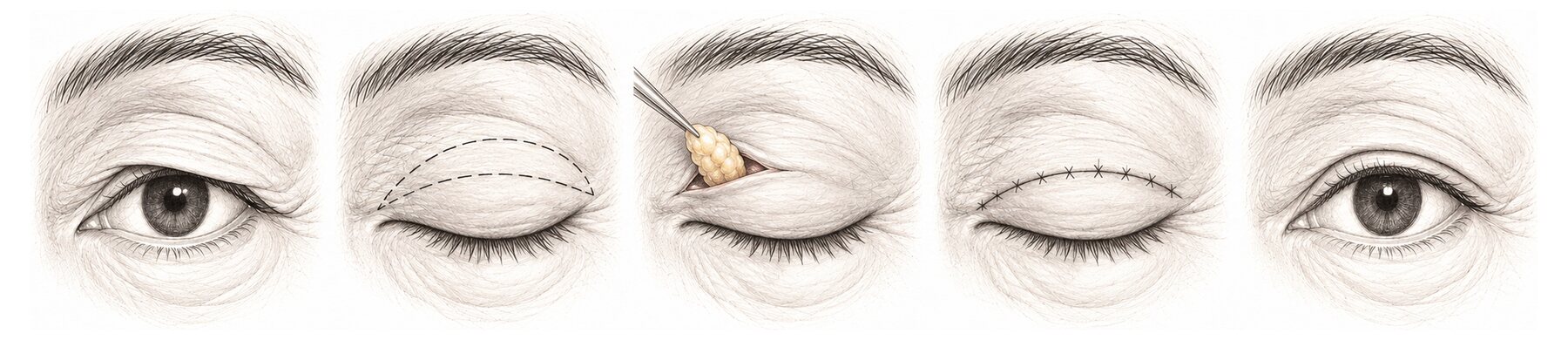
The upper eyelid is a layered structure: skin, the orbicularis muscle beneath it, a layer of fat and, deeper still, the levator that lifts the lid. Aging changes each layer differently.
Rather than trimming skin to a template, Dr. Jeong maps which layers have changed and how the tissue has slipped, and treats each accordingly. That is what allows the result to look like the patient's own eye, only rested.
The guiding principle is restraint: remove what has become excess and leave everything else in place. Over-resection is a common reason an upper lid ends up looking operated on.

Restoring both impression and vision
The clinic's classic upper blepharoplasty is more than wrinkle improvement. It aims to restore clearer, younger-looking eyes and, at the same time, the function that drooping lids have compromised.
The anatomical structure of the eye and the direction in which the soft tissue has sagged are analyzed in detail beforehand. Surgery then adjusts not only the surface skin but the muscle and tissue within the lid.
One distinction matters from the start. If the muscle that lifts the lid is itself weak, removing skin will not open the eye; ptosis correction is then the appropriate operation, and the consultation establishes which applies to you.
Who this procedure is for
- 01
No ptosis, adequate eye size
The lid-lifting muscle works normally and the eye itself is a good size. The problem is excess skin, not weak opening.
- 02
Sagging that a non-incisional method cannot hold
The eyelid skin has loosened enough that a non-incision technique would be unlikely to give a lasting result.
- 03
Thin lid skin with an existing crease
The eyelid skin is not thick and there is already a double eyelid line to work with.
- 04
Wide brow-to-lash distance, sagging outer corners
The distance between eyebrow and lashes is wide, and the skin at the outer corners of the eyes has sagged noticeably.
What makes the clinic's approach different
- SPECIAL 01
Anatomy-based precision
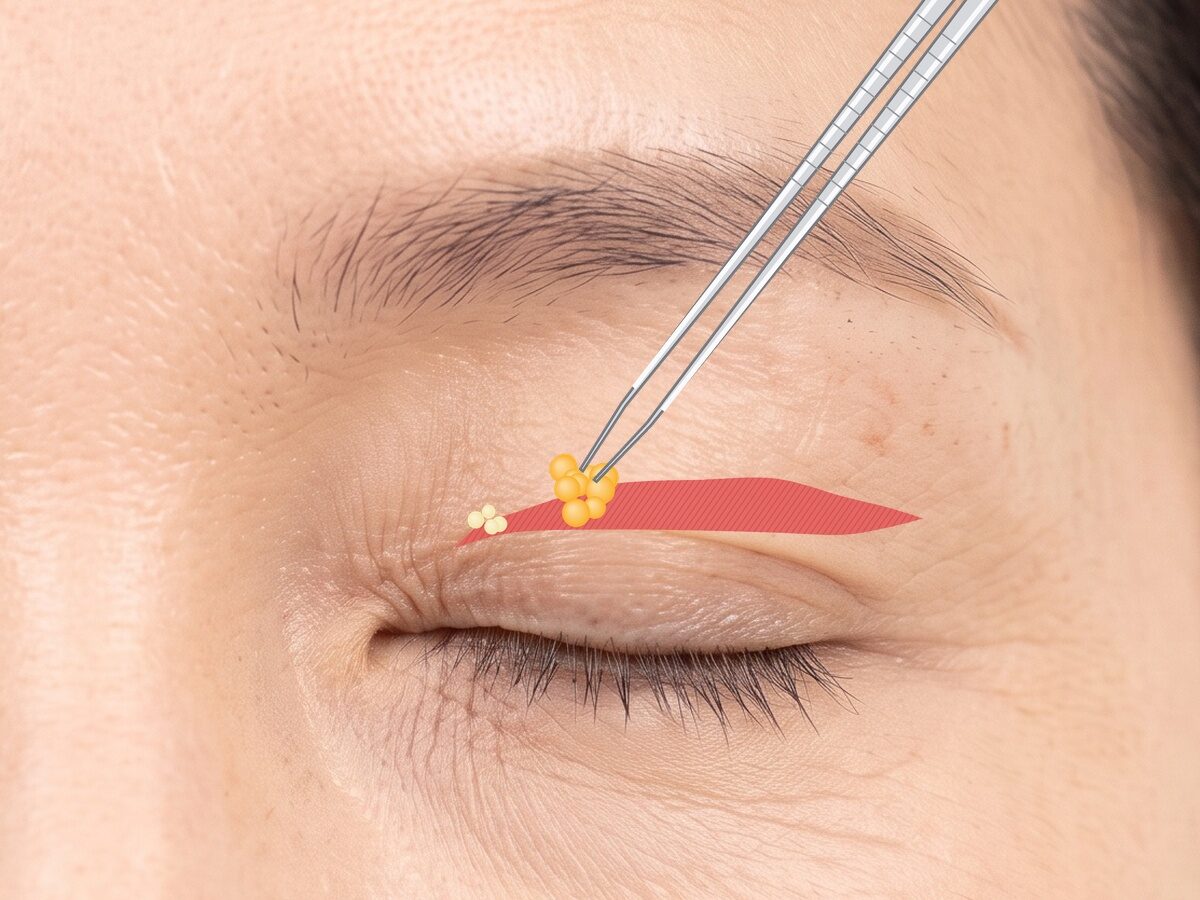
The skin, muscle and fat of the lid are adjusted with anatomical precision and long clinical experience. Read more about our doctors.
- SPECIAL 02
Minimal scarring, quick recovery
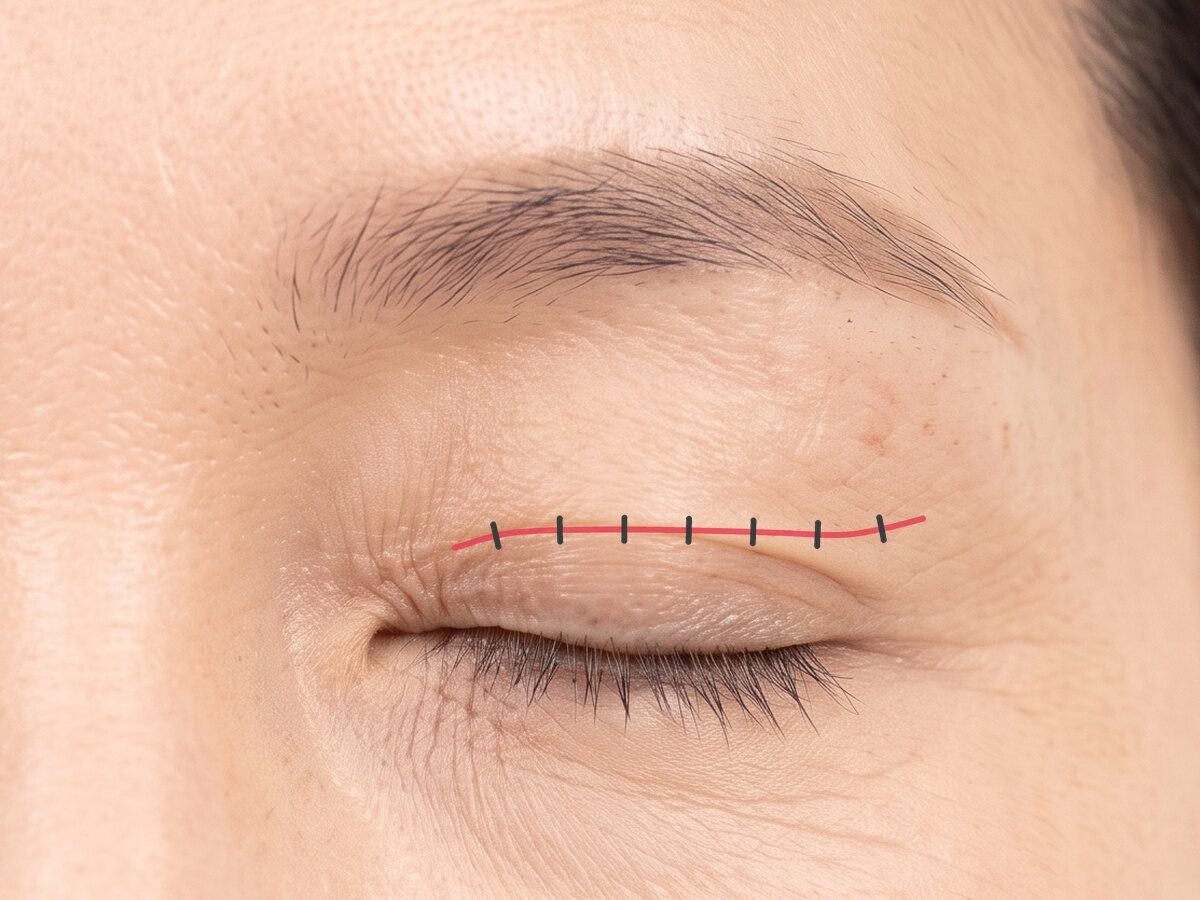
The incision follows the natural line of the lid and is closed with micro-sutures, so the scar is designed to be barely visible once healed and recovery proceeds quickly.
- SPECIAL 03
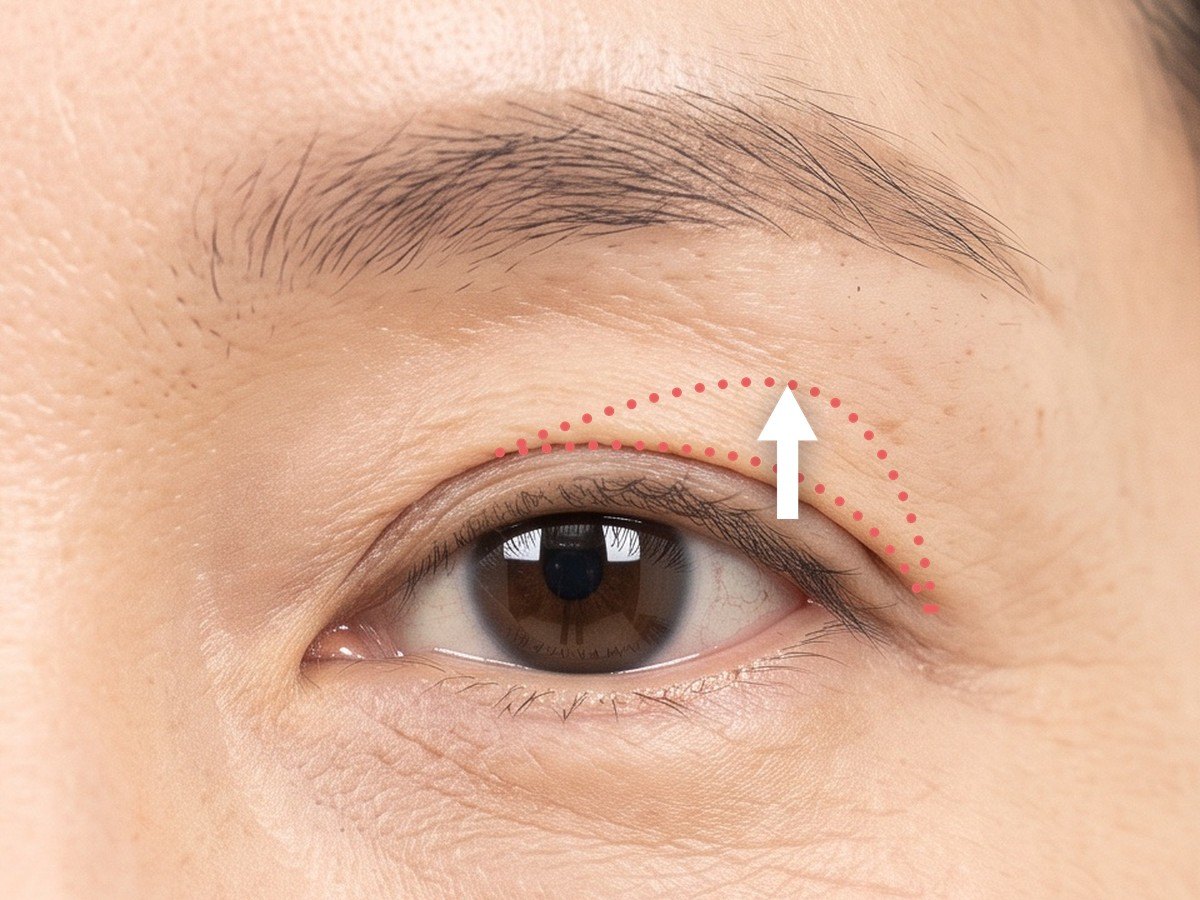
Function and appearance together
The obstructed vision and eye fatigue caused by drooping lids are relieved, while the eye becomes clearer and more animated.
- SPECIAL 04

A design matched to your aging
The degree of droop, the pattern of wrinkles and the character of the eye are analyzed together, for a change that is natural rather than excessive.
Consultation, procedure and recovery: what to expect
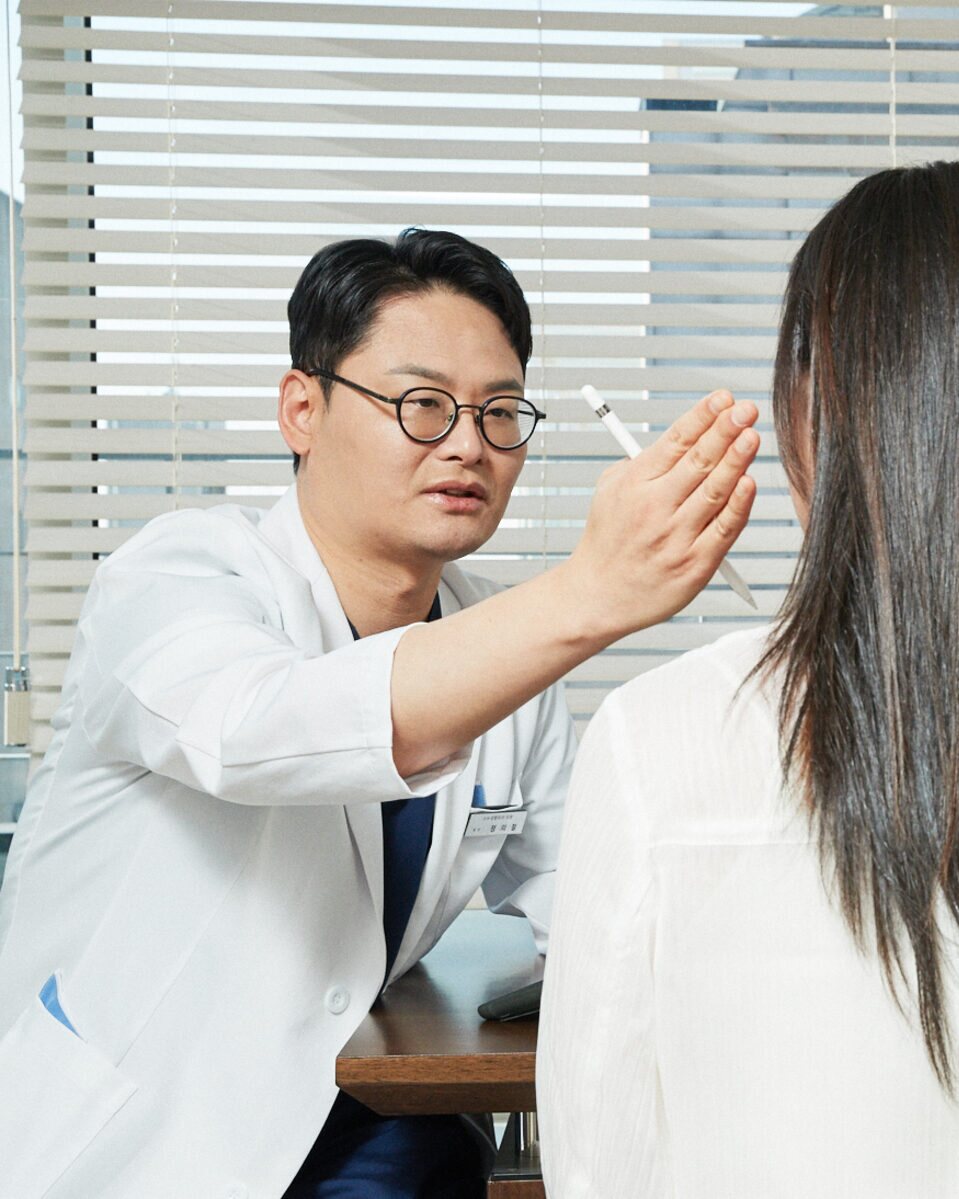
At consultation, your doctor examines how much skin has become excess, whether the lid-lifting muscle works normally, where the brow rests and how much fat is present. A brow that has descended can mimic a heavy lid, and in some patients an endoscopic brow lift is the better answer, or a complement.
The amount of skin to be removed is marked with you looking into a mirror. The design errs on the side of caution, because an over-corrected lid is far harder to repair than a modestly corrected one.
The excess skin, and where needed a strip of muscle and some fat, are removed through the incision and the lid is closed with fine sutures. Swelling and bruising subside over the following weeks, the scar line fades for months, and results vary from person to person.
Frequently asked questions
- Q1
How is upper blepharoplasty different from ptosis correction?
Upper blepharoplasty removes excess skin, and where needed muscle and fat, from a lid whose lifting muscle works normally. Ptosis correction tightens a weak lifting muscle so the eye opens further. Some patients need both.
- Q2
Will the scar be visible?
The incision follows the natural line of the lid and is closed with micro-sutures. Once healed it is designed to be barely visible, and it continues to fade over the following months.
- Q3
Will my eyes look different afterward?
The aim is your own eye, rested, rather than a new one. Only what has become excess is removed, and the crease is kept in keeping with the eye you have; patients who want a new or higher crease can discuss a dynamic double eyelid line at the same consultation.
- Q4
Do I need a brow lift instead?
If the brow has descended, some of the heaviness comes from above, and removing eyelid skin alone can pull the brow down further. Where that is the case, a brow lift, alone or with blepharoplasty, is discussed at consultation.
Begin with
a conversation.
Consultations are led by Dr. Jeong or Dr. Lee, with our medical team supporting you throughout your visit. Appointments are recommended so that you can be seen without waiting, in English or Korean.
Results and recovery times vary from person to person, and every medical procedure carries potential side effects. The information on this page is provided for general guidance only and does not replace an in-person consultation. Please consult with our doctors for advice specific to your case.